Last week, I asked a friend about his decision to become a vegetarian. I understand that there are numerous reasons that one might make that switch, e.g., personal health, environmental concerns, animal cruelty concerns, and so on. But I nonetheless find myself asking people about their own reasons, mostly out of an interest in what it says about them as a person. And my friend didn't disappoint.
He talked about a few specific experiences, in which one event or another got his wheels headed down a particular road of thought. And the conclusion that he settled on was this: When his time here on earth is done, he'd like to feel like he's made a Net Positive Impact. It's a noble goal. And one that is worthy of honest consideration by all of us.
Now this seems simple enough at first glance. Live a compassionate life. Be good to people. Help them when you can. Avoid being hurtful and selfish as much as you can. And there you have a formula for making a Net Positive Impact. But any thinking person living in the Western World should be able to figure out that things are not so simple, because our impact goes far beyond our immediate environment.
The computer that I'm typing on right now was no doubt assembled by a handful of very poor workers in a very poor country, working under very poor conditions. And the same can be said for the clothes that I'm wearing and the food that I just ate. Those workers, and millions more like them, will never have the opportunity to receive fair financial compensation for their toil. And as a consumer, I bear a chunk of the responsibility for that arrangement. I also consume vast amounts of fossil fuels, the demand for which spills the blood of countless innocents around the world. I fill up landfills with my trash. I waste water and electricity. I accept a government that deploys its' military and economic power around the world in ways that I can rarely agree with. And in spite of my awareness of the aforementioned perils of mass meat consumption, I do still consume a lot of meat.
And no matter how much I try to remain conscious of the "compassionate life" formula, I can't possibly recognize the indirect, though quite tangible, role that my existence plays in the world, and still convince myself that I am making a Net Positive Impact. I can not look at the quantifiable contributions that I make to the world and stack them up against the things that I take and the damage that I cause, and pretend for a moment that I tip the scales in the right direction.
Which leaves me with the question: What can I do? I believe that I can still remain conscious of the "compassionate life" formula. While less tangible than many of my actions, I remain confident in the importance of simply being good for yourself and those around you. But what about more concrete efforts?
I live a comfortable life. By virtue of simply being born on the right patch of dirt at the right time in history, I am afforded luxuries that most people, both at present and historically, could never even dream of. I'm not wealthy by the standards of most Americans. I work in a bar, not a bank. But my income is still far greater than that of most of the world's population. And thanks to modern technology, my resources are far greater than those of even the most wealthy people of years past.
But how much of that am I willing to forgo, and what impact will those concessions make? I could stop eating meat, like my friend. But I probably won't. More likely, I'll commit to only eating meat that is raised organically and locally, and perhaps limit my consumption to a set number of meals per week or month. What about fossil fuels? I don't own a car, but I love to travel and I fly often. I fly thousands of miles every year. Could I give that up? Should I give that up? Those flights often land me in countries that are eager for my American money. I don't delude myself that my meager tourist dollars will make any lasting impact on those that receive them, but if they put a couple of meals on a table that might otherwise be bare, isn't that a move in the right direction? Or is it not? Does that simply continue a cycle of dependency? What about my food and clothing? I can afford to buy Fair Trade food. I could even balance that cost by purchasing used clothing, and thereby kill two birds with one stone. And I could easily trim my use of water and electricity. And the vacations? What if I cut out one trip per year, and donated that money to organizations like Oxfam, Doctors Without Borders, or 826?
But even if I do all of those things and more, I honestly don't know that I can function in modern American society without taking more than I'm giving. But I do know that I should try. And I also know that I want my efforts to be thoughtful and honest, so I'm not going to commit to any specific changes right here in this space, at this time. But I will commit to the task of taking stock of my behavior patterns. I will consider what I can concede, and what more I can contribute. I will continue to give more honest consideration to the idea of my net impact on the world in which I live.
Showing posts with label reflections. Show all posts
Showing posts with label reflections. Show all posts
Tuesday, March 6, 2012


Saturday, December 31, 2011
33. Wake Up And Fight
I like the idea of New Year's Resolutions/Goals/Rules/Plans. I like the idea of taking a moment to reflect upon what exactly it is that I want to get out of my life. Of course, plans and goals can change. Unexpected opportunities and circumstances can shift the direction that I want to go. And I'll never live long enough to do all of the things that I can dream of doing. But I'm going to try to do them all anyway. And making a list every now and then is helpful.
Most of the things that I'll put on my annual list are specific. Such as last year's "Run Three Marathons", "Clean the Apartment on the 1st and 3rd Tuesday of Every Month", or "Blog At Least Once a Month." (I ran two, and I missed the third due to injury. The apartment... Well, there's gonna be a do-over in 2012 on that one. And as for blogging, you're reading Post #52.) I like to be specific because I'm a cheater at heart. And I need a system that doesn't allow me to convince myself that I've done something, when I actually haven't.
For other people, the list is more abstract. Do this more. Do that less. Be mindful of this thing and that. And if that works, then that's fantastic.
But whatever form the list takes, the process itself is worthwhile. The process of asking yourself to consider what is important. What is fulfilling. And then making the conscious decision to move in that direction. The decision to move with purpose.
It's not so easy as it sounds, of course. And I come up short often. But it beats living life with one hand on the snooze button. So with 2012 just a few hours away, I want to throw a few of my plans out into the internet.
Writing. Last year, I just wanted to get comfortable with the idea of taking something that I'd written and putting it out into the world. I've done that with this blog. I've posted some random musings from my day to day life, and I've posted other things that have been quite personal. I'm going to continue with that, but I want to do more. I write fiction. I'm not terribly good at it. But I'm not terrible either. Before 2012 is over, I will submit at least three stories for publication. It doesn't really matter where. But I will put them out into the world. I will also complete the project that I've started, which involves interviewing marathoners and writing their stories.
 |
| Woody Guthrie's Resolutions for 1942 |
For other people, the list is more abstract. Do this more. Do that less. Be mindful of this thing and that. And if that works, then that's fantastic.
 |
| Feb 2011 - Learning To Ice Skate |
But whatever form the list takes, the process itself is worthwhile. The process of asking yourself to consider what is important. What is fulfilling. And then making the conscious decision to move in that direction. The decision to move with purpose.
 |
| 2011 Polar Plunge - Lake Michigan New Year's Day |
Writing. Last year, I just wanted to get comfortable with the idea of taking something that I'd written and putting it out into the world. I've done that with this blog. I've posted some random musings from my day to day life, and I've posted other things that have been quite personal. I'm going to continue with that, but I want to do more. I write fiction. I'm not terribly good at it. But I'm not terrible either. Before 2012 is over, I will submit at least three stories for publication. It doesn't really matter where. But I will put them out into the world. I will also complete the project that I've started, which involves interviewing marathoners and writing their stories.
 |
| Cleveland Marathon - May 2011 |
Running. I will run three marathons. Prague in May. Denver in September. And Sacramento in December. I will train my ass off. And by December, I will qualify for the Boston Marathon.
Travel. Three new countries. Czech Republic. Poland. Russia. Two new states. Oregon and Washington.
I'm going to fill that list up with some smaller goals too. But that'll do for this post.
Thank you, whoever you are, for taking the time to read this blog. I hope you've had a great year. And I hope you've got an even better one coming. Happy New Year, Internet Surfers! See you in 2012!
Travel. Three new countries. Czech Republic. Poland. Russia. Two new states. Oregon and Washington.
I'm going to fill that list up with some smaller goals too. But that'll do for this post.
Thank you, whoever you are, for taking the time to read this blog. I hope you've had a great year. And I hope you've got an even better one coming. Happy New Year, Internet Surfers! See you in 2012!
Tuesday, December 20, 2011
Taxi
"...to experience a crowded, hot, slow, consumer-hell-type situation as not only meaningful, but sacred, on fire with the same force that lit the stars --- compassion, love, and the subsurface unity of all things." - David Foster Wallace
I took a cab home from work last night. The driver was a middle-aged man and he had a thick accent that I assumed came from somewhere in Africa. He asked me where I was heading, and then he returned to his cell phone conversation. His voice was loud and his demeanor jovial. He had large hands with knuckles like fat acorns, a big soft smile, and deep lines on his forehead. He laughed often and with his whole body.
As the cab took us south on Halsted, I noticed something irregular about the driver's speech. A hitch and a stutter. And I felt a bit surprised by that. I was surprised because I have a preconceived notion, a shallow stereotype, of what a stutterer is like. Anxiety ridden, timid, insecure, etc. And this man seemed to be far from any of those things.
And then I realized that I was mistaken. There was no hitch. No stutter. The man was using a language that includes clicks and pops and something that seemed to come from the top of the throat and the roof of the mouth. As if he were gathering phlegm. The sounds were more quiet than those that were more familiar to my ears. Just soft and subtle sounds among the louder bits of English, French, and something unrecognizable.
And as I listened intently to the man's conversation, I became more and more curious about him. I climb into at least a couple hundred cabs a year, and almost all of those drivers are foreign born. But this time, as I listened to these foreign sounds from the back seat, I stopped to consider just how radically different this man's native country may be from the one that he lives in now. And I wanted to know about those differences. Or perhaps there are more similarities than I'd guess. Which I'd also like to hear about. Either way, I just wanted to hear this guy's story.
I didn't get his story though. He did finish his phone call a few blocks prior to pulling up in front of my building. So I was able to ask him where he was from. But that was it. I decided to be content with that.
He is from Algeria. The largest country on the African continent. Home to vast stretches of Saharan Desert. Home to the Atlas Mountains and Mediterranean coast lines. Large cities in the north. Oil reserves in the south. Home to obscene wealth and widespread poverty. Home to Berbers and Arabs. Home to despots and civil wars. Home to countless tribal groups and the cultural stamp of English/French/Italian colonial powers. Home to fishermen and blacksmiths. Beggars and thieves. Home to mothers and fathers and brothers and sisters. And home to cab drivers.
And I wonder where this cab driver's story fits in. He was born in Algeria. A little baby. Probably some time in the 1960s. Probably into one of the densely populated cities in the north. Perhaps Algiers? Maybe Oran or Constantine? How long did he stay there? What was his experience like? What was his family like? Did he leave them behind when he left the country? Or were they here in Chicago with him today? Were they even alive? Does he miss home? Does he lay awake at night and think of somebody that is half a world away?
Obviously I'll never know the answers to those questions. Our paths crossed briefly. I won't be more than a slight gust of wind in the story of his life. But I want him, even if it's just a small piece of him, to be a bit more than that in mine.
I took a cab home from work last night. The driver was a middle-aged man and he had a thick accent that I assumed came from somewhere in Africa. He asked me where I was heading, and then he returned to his cell phone conversation. His voice was loud and his demeanor jovial. He had large hands with knuckles like fat acorns, a big soft smile, and deep lines on his forehead. He laughed often and with his whole body.
 |
| Sahara Desert |
And then I realized that I was mistaken. There was no hitch. No stutter. The man was using a language that includes clicks and pops and something that seemed to come from the top of the throat and the roof of the mouth. As if he were gathering phlegm. The sounds were more quiet than those that were more familiar to my ears. Just soft and subtle sounds among the louder bits of English, French, and something unrecognizable.
And as I listened intently to the man's conversation, I became more and more curious about him. I climb into at least a couple hundred cabs a year, and almost all of those drivers are foreign born. But this time, as I listened to these foreign sounds from the back seat, I stopped to consider just how radically different this man's native country may be from the one that he lives in now. And I wanted to know about those differences. Or perhaps there are more similarities than I'd guess. Which I'd also like to hear about. Either way, I just wanted to hear this guy's story.
I didn't get his story though. He did finish his phone call a few blocks prior to pulling up in front of my building. So I was able to ask him where he was from. But that was it. I decided to be content with that.
 |
| Algiers |
And I wonder where this cab driver's story fits in. He was born in Algeria. A little baby. Probably some time in the 1960s. Probably into one of the densely populated cities in the north. Perhaps Algiers? Maybe Oran or Constantine? How long did he stay there? What was his experience like? What was his family like? Did he leave them behind when he left the country? Or were they here in Chicago with him today? Were they even alive? Does he miss home? Does he lay awake at night and think of somebody that is half a world away?
 |
| Atlas Mountains |
Monday, October 31, 2011
There Isn't
It's the middle of the night. I'm in my bed. There is no sound other than the low hum of the refrigerator.
There is a sense of neglect to my apartment. My sheets and blanket need to be washed. Magazines and books and stacks of CDs need to be reorganized. I should vacuum and mop too. The place feels like an old car with rust on the body and an empty pop can that has been on the floorboard too long. I feel a little dirty by extension. And I also have the somewhat contradictory feeling of having just woken up here.
I've been reading. The book is Stop-Time by Frank Conroy. The line that keeps coming back to me is this: "...as if there were all the time in the world."
I keep putting the book down and looking around at my apartment. And I feel those words crawling all over everything.
There is a sense of neglect to my apartment. My sheets and blanket need to be washed. Magazines and books and stacks of CDs need to be reorganized. I should vacuum and mop too. The place feels like an old car with rust on the body and an empty pop can that has been on the floorboard too long. I feel a little dirty by extension. And I also have the somewhat contradictory feeling of having just woken up here.
I've been reading. The book is Stop-Time by Frank Conroy. The line that keeps coming back to me is this: "...as if there were all the time in the world."
I keep putting the book down and looking around at my apartment. And I feel those words crawling all over everything.
Wednesday, October 12, 2011
Room With A View
I was at a high school yesterday afternoon. I was there to help some students with their English papers. There were a lot of students in the Learning Resource Center, which is available for one hour after classes are over. Many were working on their own. Perhaps just taking advantage of an atmosphere that is conducive to studying. Others were using the computers. And others were there in search of academic assistance. The latter group is the smallest, though not for lack of need.
It can be difficult to ask for help. Difficult to admit uncertainty or reveal any sense of vulnerability. This is true for most of us, but it's an insecurity that can be especially acute among adolescents. Though some of the students did seem to be more comfortable asking for help with some subjects than with others.
I sat at the table designated for English tutors and waited for students. There were students at the math table, and several at the science table. One student asked me if I knew anything about quantum mechanics. I told her that I didn't, but that I'd try to read through the work with her and help in any way that I could until a more qualified tutor became available. Thankfully the cavalry arrived sooner, rather than later.
I also talked with a teacher for a moment. We discussed the low levels of writing proficiency among many of the students. That was something that I'd seen firsthand through tutoring, but that she was more intimately familiar with. She nodded at the empty seats at the English table and said, "that's a tough one for them to admit they need help with."
I thought about that statement for a while. For better or for worse, math and science are subjects that many people in our society struggle with. Perhaps that lessens the feelings of inadequacy for the students that need help in those areas.
But English is different. Our relationship with words is personal. We use language to communicate with each other. We use it categorize and organize everything that we encounter in the complex world around us. And, perhaps most importantly, we use language to sort through and define our own internal thoughts and feelings. And in that sense, our words are intricately and inseparably tied to our sense of self.
In that light, it makes sense that students would be hesitant to ask for help. The insecurities, anxieties, and self-doubt that seem part and parcel of being a teenager, would make the already difficult task of opening oneself to personal criticism seem absolutely unbearable.
However, being sympathetic to that doesn't really help me as I sit at the table waiting for a student. I can create a recipe that spices up constructive criticism with sincere praise, but I still have to get some food in the kitchen in order to cook.
I'd like to say that I had some sort of epiphany while waiting for students. That I discovered a method for miraculously breaking down the defensive barriers built by pride and fear. It feels good to wrap a nice little bow around the solution to a problem. But that didn't happen.
I did eventually get a student to work with though. He was writing a paper on Macbeth. He knew what he wanted to say, but he wanted my help with the structural aspects of the paper. He knew that there were improvements to be made, and that those improvements were escaping him. He listened to my feedback openly and thoughtfully, and seemed eager take what he could from our exchange.
His willingness to acknowledge his linguistic shortcomings was both refreshing and endearing. And I found myself searching for the source of that courage while we talked. He apparently excelled in other areas, such as the hard sciences. Maybe that success helped give him the confidence to address the things that he struggled with. Though I'm sure that there is much more to it than that. My interaction with him was brief. And any conclusions that I might come to about what makes him who he is, would be hopelessly incomplete.
We finished up, and I looked at the clock. The hour was almost over. I looked around the room. I looked at the students. Watched them interact with each other. Saw a few knowing glances exchanged among friends. Noticed the top of the high school hierarchy of strong boys and pretty girls. And I saw a few fevered pencils quickening as the time to leave approached.
There was something comforting about the familiarity of it all. There were plenty of outward differences between this environment and my own adolescence. But underneath, there was something timeless and reassuring. Something that said that all of life's dilemmas were here long before I was, and that they'll all be here long after I'm gone. There is a peace that comes with the moments that I can see this, and yesterday I got that peace for a little while.
Wednesday, July 20, 2011
Tidbits From The Beach
I'm in North Carolina, at Sunset Beach. This is the fourth day of my vacation. Two friends of mine got married here a few days ago. They met each other about four years ago, and I met them both around that same time.
We don't live in the same city any more. They've been in Denver for three years now. So I've only seen brief glimpses of their transition from the realm of dating to the that of marriage. I've visited with them in Denver a few times. I've seen the home that they share. Played with their dogs. Drank beer with them at their neighborhood bar.
That view, however limited, has left me with a good impression. The seem to have a genuine tenderness with each other, and they seem to communicate openly and honestly. They're both thoughtful and intelligent people, and they seem to share common values and perspectives.
And I feel confident that they have found connections with matters that are deeply personal as well. We all have various pieces of debris from our life, that we carry around within ourselves. They seem like they've found a way to share those pieces of themselves with each other, and they seem like they've grown together through that process.
Its a remarkable thing to witness, no matter the vantage point.
I'm sharing a beach house this week with three other friends. We've had a lot of down time. I've been able to read a little. Write a little. Eat and drink a lot. Do some swimming and lounge in the sun. Things have slowed down. We have nowhere to be. We just get to be.
We watched the sunrise on the beach after a night of great food, heavy drinking, story telling, and hard laughter. Three of us went running together yesterday morning. And I believe there is an ocean-side ice cream cone in my future.
The slow and easy pace allows me time to see things in a different light. I can pause to consider the people around me as individual people. With their own unique hopes and fears. Their own personal history. I hear the waves, and pause to consider the ocean of which they are a part. I can stare at the stars, and consider each as an individual sun. And the limitless possibilities of the universe begin to open up.
Life is beautiful. And I'm going to go jump in the ocean now.
 |
| Bride and Groom |
That view, however limited, has left me with a good impression. The seem to have a genuine tenderness with each other, and they seem to communicate openly and honestly. They're both thoughtful and intelligent people, and they seem to share common values and perspectives.
And I feel confident that they have found connections with matters that are deeply personal as well. We all have various pieces of debris from our life, that we carry around within ourselves. They seem like they've found a way to share those pieces of themselves with each other, and they seem like they've grown together through that process.
Its a remarkable thing to witness, no matter the vantage point.
 |
| Me on the left. Justin on the right. Beach house roof deck. |
We watched the sunrise on the beach after a night of great food, heavy drinking, story telling, and hard laughter. Three of us went running together yesterday morning. And I believe there is an ocean-side ice cream cone in my future.
 |
| Waiting on the sunrise with the groom. |
Life is beautiful. And I'm going to go jump in the ocean now.
Wednesday, July 13, 2011
Bug Bite - Part 2 of 3
We arrived in Queretaro on a Saturday, and that was by design. Jason had been there once before, and he'd come away with a decidedly favorable impression of the city's nightlife. So we figured we'd soak up the night spots there, and then have the following weekdays to explore Mexico City's museums, parks, ruins, and so on. But those plans had one big hitch that none of us had been aware of. The federal elections were going to be held on Sunday, and it is illegal to sell alcohol in Mexico on election day. So from Saturday at midnight, through Sunday evening, the bars that we'd hoped to visit would be closed.
We had actually heard about this a few days prior to arriving in Queretaro. But I don't think we really believed it. My own disbelief was rooted in the impression that I had of the country's legal system in general. The handful of cross border excursions that I'd made over the years had taught me that "illegal" in Mexico, really just meant "expensive". And even the term expensive was relative. But the closer election day came, the more we talked to people about this one day prohibition. And the more we talked to people, the more we realized that the bars really were going to close.
 |
| Lucha Libre Flyer |
Before the liquor sales shut down, we grabbed a bottle of Cuban rum. (Good rum that was illegal in the U.S. because of an outdated, misguided, and inhumane trade embargo. But was readily available at a great price in Mexico.) And with most of that bottle in our bellies and an excited sense of mischief in heads, we arrived at Arena Queretaro.
 |
| Myself and Jason at Arena Queretaro. |
I was later told that we would have experienced a much larger crowd had it not been election night. But whatever the hundred or so person audience lacked in size, they more than made up for in intensity.
As soon as the first wrestlers took to the ring, they were greeted by cheers and jeers from the fans. One woman in particular stood apart from the rest of crowd and earned a permanent spot in my memory. The venom that she aimed at her enemies in the ring was both frightening and comical. Her face was red, her muscled strained, and the animosity in her voice might give somebody the impression that she was confronting the murderer of a loved one, rather than an underpaid b-list entertainer. But that alone isn't what made her stand out. Throughout the matches, while she spewed out hate filled obscenities that filled the gym, a baby of about four or five months slept peacefully in her arms. Not once did she hand off the baby to one of the merely mildly ruffled women in her party, who seemed content to shout an occasional admonishment or perhaps shake a fist at the ring. And not once did that baby show any sort of alarm at the fury that was emanating from it's presumed mother. Which led me to speculate that perhaps she is like this all the time. That thought led my down a whole other rabbit hole of questions. For instance, what might life be like for that kid, and for the man that helped produce the offspring?
But I did eventually pull my attention away from the woman, and return my gaze to the ring. The view from the front row provided an interesting perspective on the wrestling. The punches and kicks were clearly not landing with full force. And they tossed each other around with moves that were obviously choreographed. But it was equally apparent that these guys were taking a beating. The sweat was pouring out, the cuts and scrapes seemed quite real, and the labored breathes coming from the ring were evidence that they were giving everything they had to the performance. And then they took their battles beyond the ropes.
 |
| Lucha Libre @ Arena Queretaro |
As that realization sank in, the excitement and the anticipation began to mix with the Cuban rum, and I turned to Jason and Joe, and told them that I wasn't going to move if one of the guys got thrown our way. I wanted to get in on the fight somehow. And just a moment later they came flying my way.
I think it was the "good guy" that landed in my lap, but I couldn't be sure. Either way, I grabbed him from behind and held him in a full nelson. This was a pretty big guy, and I have no doubt that he could have shaken off my little seventh grade playground move with relative ease, had he chosen to. But both wrestlers embraced the improvisational moment. The one in my lap pretended to struggle for his freedom, while his opponent tried to stifle the laughter that I could see behind his mask, all while delivering heavy stomps to the prone man's chest.
After delivering those kicks, the standing wrestler grabbed his enemy and threw him back into the ring and I nearly pissed myself with glee. I looked around and saw the chairs that had been knocked over, the spilled popcorn and cokes that littered the floor, and I noticed that the fallen fighter had left some of his blood on my pants.
The absurdity of it all was absolutely beautiful. In that environment I could just let go of any attachments that I had to the realm of logic and reason and I could embrace the honesty and the simplicity of impulse and sensation. It isn't a state that I want to find myself in on a daily basis, but there is an undeniably cathartic release involved in the process of giving yourself over to those elements from time to time.
After the last match, I left Queretaro Arena with an easy smile on my face. It was a quiet summer night in the city, and we rode in silence in a cab with the windows rolled down.
The polls had closed, and as we rode down the street we noticed that people were posting what looked like results from individual precincts. Big pieces of paper with names and numbers printed on them, were stapled to walls. And the people passing by immediately gathered around to take a look. But it was a close and highly contested election, and the results were far from final that evening.
That following morning we packed our bags and once again set out for the bus station. We had one stop left, before returning to Jason's place in Monterrey. Mexico City was just a quick ride down the highway and I was excited to get there.
Mexico City was the red letter destination on that itinerary for me. I love the chaotic energy of large cities, and I knew that this was one of the biggest in the world. And in theory, I knew that I was going into something that was outside of my realm of experience. I'd listened to Jason talk about the place. I'd read about it. I'd seen it portrayed vividly in one of my favorite movies. But in the end, nothing that I had read or heard about could convey the sights, sounds, smells, and the feel of that city. In order to get even a taste of the humanity that that city is teeming with, I had to stand in it.
Sunday, July 10, 2011
Bug Bite - Part 1 of 3
Zacatecas, Mexico - June 28, 2006
"The sun has yet to climb the hills into the sky, but the town has begun to stir. Uphill somewhere, a rooster has been crowing for the last twenty minutes. Two European backpackers leave the hostel and march up the brick/stone street towards the bus station, preparing to leave the sleeping town behind. A stray cat sifts through a bag of garbage until he is interrupted by the garbage truck. Though far smaller and without the loud machinery and warning beeps of its American counterpart, the small white pick-up truck rumbles to a thundering halt, and the sound of its engine echos off the concrete walls of the small colonial era buildings.
With the chiming of the church bells the sky turns a lighter shade of blue, as if awakening instantly to an alarm that has sounded every morning for several hundred years. And on cue, the sounds of a waking town join in. The clink of bottles from an upstairs apartment. The sounds of footsteps along the walkway. A baby crying in the distance. Traffic noise becomes more constant. Doors and windows open, and heads peak out to assure themselves that all is as it should be. A pack of dogs trot down the street, trying to sniff out scraps that the garbage men, or the cat before them, may have overlooked. And the chirping and tweeting of hungry birds fills the sky until they are overtaken by yet more church bells. This time, louder and more numerous, the sounds of the bells crash throughout the town, insisting that those who missed the first call rise and join the new day."
I wrote that in my notebook while sitting outside on the hillside steps of a sidewalk in Zacatecas. I'd gotten up early that morning to go for a walk. I'd been in Mexico for a few days, and I was experiencing the wonderful way in which traveling to an unfamiliar environment can awaken the senses and fill the head with a romantic haze.
I'd done a fair amount of traveling before that. I'd been on road trips throughout the U.S. as a child and as an adult. And I'd ventured into border towns like Tijuana and Nuevo Laredo, to take advantage of the nightlife. But this trip was different.
I was with two of my closest friends, Jason and Joe, and we had almost two weeks to explore interior Mexico. We started up north in Monterrey, and then moved south to Zacatecas and Guanajuato, before finishing up in Queretaro and Mexico City, and eventually going back to Monterrey. My friend Jason was living in Monterrey at the time, so we had the benefit of his previous travels throughout the country, as well as the tips and suggestions that he'd received from other people that he'd met there. That additional source of information, more than anything else, helped shape the format of that trip. And that trip in turn, prompted a major shift in how I viewed travel in general.
We made our way around the country by bus. For a fraction of the cost of a slow and uncomfortable bus ride in the States, we got big comfortable seats, were given complimentary sandwiches and cans of pop, and direct routes with minimal stops. The buses were equipped with TVs that played bad movies, like George of the Jungle 2 and Daredevil, in Spanish. And as we rode them, we got the chance to take in the scenery.
In northern Mexico, we rode through the empty desert for hours on end. The differing shades of brown dirt and grey rocks, were the only colors outside of our bus. It was like riding through the remains of an old black and white movie, with all of the props having been rounded up and taken away years before. I remember seeing storms far off in the distance, but they never caught us.
When we arrived in Zacatecas, it was early evening. We went directly to a hostel that had been recommended by one of Jason's co-workers. I never wrote down the name of the place, but it remains one my favorites on an ever growing list of temporary homes that I've settled into while traveling.
When we stepped into the old building that housed the hostel, we were greeted by a young man by the name of Ernesto. I don't remember much about Ernesto or his life outside of that job, though we did talk a little about that. But I do remember that he was an eager host. After we dropped our bags in our room, he took us on a tour of the small property. He asked us where we were coming from and how long we'd be in Zacatecas, and he talked about the city's people and history with an open and sincere affection. He showed us the refrigerator full of beer that was available for the hostel's guests, and explained that the tab was tallied up on the honor system. And then finally, he took us to the rooftop, where other lodgers would gather, usually with several of those beers, and take in the view of the city while trading travel stories and offering suggestions on what to see and do down the road.
We started off the evening on that rooftop, but were soon out on the cobblestone streets. We wandered from one landmark to another. An old church here, and an old tavern there. And as we walked, we kept running into small bands of boisterous revelers. We'd usually see a couple dozen to a group, but sometimes more. They had trumpets and guitars, bottles of tequila, and small ceramic cups hanging from pieces of string around their necks. Anywhere we walked, we heard their laughter and their songs bouncing around us.
Once we made friends with one of the groups, we learned that these were politically motivated gatherings. The federal elections were just days away, and the celebrations were a sort of "Get Out The Vote" campaign for the candidates/parties that our new friends were supporting. A big part of me was quite interested in the political aspect of the tradition that we had stumbled upon. But the general feeling that I got from the people around me was casual and carefree, so I let my inquiries go and I embraced the music and tequila side of the party instead.
We spent the rest of that evening on the streets and in the taverns. For the first time, I used a urinal while taking in a full view of the bar, and allowing the bar an almost full view of me. (That particular bar had crossed the gender barrier years before, so there were small saloon style doors separating the urinal from the rest of the room. And the location and visibility of that urinal did seem like a relic that was held onto for its novelty, in order to help the 100+ year old tavern capitalize on the tourist trade. But some of the darker and dingier bars that I discovered in Mexico had not yet crossed that barrier and were far less discreet.) We met a handful of other travelers, including a tattooed girl from Brooklyn that had a wonderful passion for Heavy Metal and was carrying around a donkey skull in a hefty bag. And eventually we made our way back to the rooftop, opened one last beer, and wound down with some quiet conversation under the big desert sky.
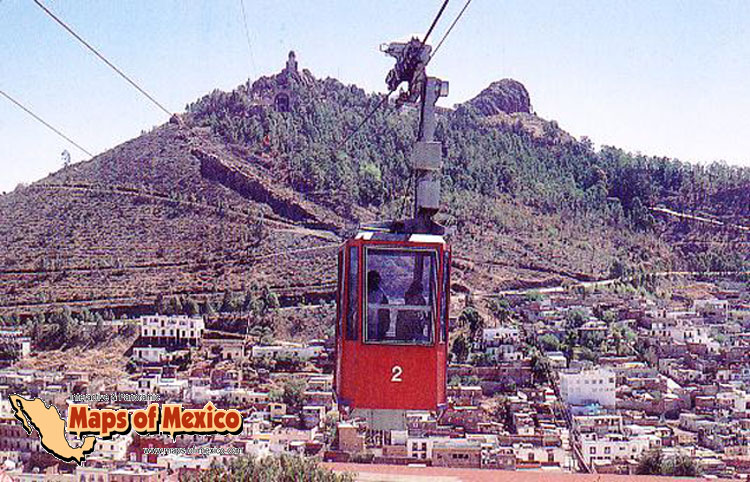
We made the sightseeing rounds the next day. We took a ride on the teleferico, which gave us an awesome panoramic view of the city. We went on a tour of the old silver mine that the city was built around. Our guide showed us some of the natural beauty inside of the caves while explaining the brutality of the conditions for the men, women, and children that worked in them. And after that, we walked the streets while munching on mangoes from street vendors and doing some people watching.
Those daytime walks have since become one of my favorite things to do while traveling. There is a certain magic to the process of simply wandering around for hours, with no specific destination, taking in the sounds and the smells of a new place. The vast array of differences, both subtle and stark, between that new place and the more familiar surroundings of home, have a way of forcing the mind to open up. Because it's not so easy to put your head down and go through the motions of your day, when you can't quite recognize most of what is happening around you.
Something as simple as a search for helpful landmarks or an attempt to use a few new words from a foreign tongue, can get the wheels turning. And then little by little, the things that you do know begin to give way to the things that you don't know. You stop seeing passersby as a lump of motion, predefined and categorized in your mind. And you begin to see the individual expressions on the faces of the people that you pass. You may notice an odd gait on another walker, or you may take a moment to consider the intensity with which a small child can explore a patch of dirt. You might take in the woodwork on a door frame, rather than just passing through the door without a thought. Even something as common and mundane as a piece of litter, or the lack thereof, can spawn speculation about the environment in which you stand.
Whatever form it takes, the awakening that travel can help facilitate is a priceless experience. And this is where I began to make that discovery.
After a couple more days in Zacatecas, we made our way to Guanajuato. Guanajuato greeted us with yet another hostel with a rooftop patio. This hostel had a different feel to it though. It was significantly more quiet, but it was a peaceful, rather than an oppressive, quiet. The building was at the top of a small hill, at the end of a series of alleyways and narrow passages. Even the main street at the bottom of the hill was closed to automobile traffic because of construction, which just added to the quiet and out of the way tone of the place.
The man that owned and operated the hostel was in his 50s. In the evenings, he came up to the rooftop and put some lean and stringy meat on the grill for his boarders. We bought caguamas from a store down the hill, and again spent some time exchanging stories with the other travelers. There were a couple of Americans that were regulars on the rooftop. One was a twentyish college kid with too much Dave Matthews on his ipod, and the other was a middle-aged man from San Francisco named Noonan. Both were in town for several months as students.
Noonan had a zeal for story telling that was eclipsed only by the laughter that was always brimming among his words and that often erupted from his belly, overtaking him and everything around him. Whether we were on the rooftop with him, or tucked away in our room around the corner, there was never any doubt as to whether Noonan was around.
The hostel's owner, whose name I can't remember, was a great help to us. From the rooftop, he was able to point out different destinations and points of interest around the city. Using that perch, he guided us to museums, statues, and old churches. And he showed us were we could get a hot breakfast and catch a World Cup match at six in the morning.
The city itself also held a number of pleasant and/or interesting discoveries. Many of which we were unaware of when we arrived.
We found El Museo De Las Momias on our second day there. The mummies that lined the halls of the museum were both fascinating and disturbing, and at least a little morbidly humorous as well. Wires were used to hold the bodies in the desired positions, and some still wore clothing that seemed strangely well preserved considering the century and a half or so that had passed.
Not long after leaving that museum I ate the best damn torta I have ever had. We were eating at a small lunch counter that couldn't have fit more than four people. And whether it was the fresh bread and produce, the buzz of the trip, or some combination of the two, that sandwich was amazing. If I ever find myself back in Guanajuato, finding that little lunch counter will be at the top of my itinerary.
We had plenty of aimless daytime wanderings and nighttime bar hopping in Guanajuato as well. We found the world's largest bags of cheese puffs. We met more people. A group of teenagers from the city of Puebla taught us a new drinking game, which I think translated into "keep telling that chubby American guy that he has to take another drink". We found karaoke. And eventually made our way onto a late night dance floor.
But after a few days of that, we got back on the bus. The next ride was quite a bit shorter than the first two. We had made it pretty far south already. And as we moved in that direction, I noticed a number of changes in our surroundings.
 The countryside in between the towns and cities became more heavily populated. The deserts of the north were replaced with rolling hills. Some of the land was crudely farmed and roadside produce stands spotted the highway. Political billboards sprouted up. The red and yellow of the PRD/PT alliance, virtually nonexistent in the north, was now inescapable. On the outskirts of some towns, goat herders and burro-pulled carts passed among the piles of used tires and broken toilets that littered the ground. Near other towns, the land was noticeably cleaner and more green. The broad hills sometimes covered with healthy looking farms, or low and wide trees and enormous cacti.
And then we arrived in Queretaro. A big, bustling city, complete with the noise, congestion, and chaos that often contribute to the electricity that only the world's larger urban areas seem capable of producing. We didn't find any vacancies at the first few hostels we went to in Queretaro, so we decided to settle in at a cheap, and somewhat seedy, hotel instead. It couldn't have been a better fit for that weekend. And with that development, I saw the birth of one of the most valuable lessons I've taken from the traveling that I've done over the last five years. Which is that, things will not always work out the way that you planned, but things will always work out.
"The sun has yet to climb the hills into the sky, but the town has begun to stir. Uphill somewhere, a rooster has been crowing for the last twenty minutes. Two European backpackers leave the hostel and march up the brick/stone street towards the bus station, preparing to leave the sleeping town behind. A stray cat sifts through a bag of garbage until he is interrupted by the garbage truck. Though far smaller and without the loud machinery and warning beeps of its American counterpart, the small white pick-up truck rumbles to a thundering halt, and the sound of its engine echos off the concrete walls of the small colonial era buildings.
With the chiming of the church bells the sky turns a lighter shade of blue, as if awakening instantly to an alarm that has sounded every morning for several hundred years. And on cue, the sounds of a waking town join in. The clink of bottles from an upstairs apartment. The sounds of footsteps along the walkway. A baby crying in the distance. Traffic noise becomes more constant. Doors and windows open, and heads peak out to assure themselves that all is as it should be. A pack of dogs trot down the street, trying to sniff out scraps that the garbage men, or the cat before them, may have overlooked. And the chirping and tweeting of hungry birds fills the sky until they are overtaken by yet more church bells. This time, louder and more numerous, the sounds of the bells crash throughout the town, insisting that those who missed the first call rise and join the new day."
I wrote that in my notebook while sitting outside on the hillside steps of a sidewalk in Zacatecas. I'd gotten up early that morning to go for a walk. I'd been in Mexico for a few days, and I was experiencing the wonderful way in which traveling to an unfamiliar environment can awaken the senses and fill the head with a romantic haze.
I'd done a fair amount of traveling before that. I'd been on road trips throughout the U.S. as a child and as an adult. And I'd ventured into border towns like Tijuana and Nuevo Laredo, to take advantage of the nightlife. But this trip was different.
I was with two of my closest friends, Jason and Joe, and we had almost two weeks to explore interior Mexico. We started up north in Monterrey, and then moved south to Zacatecas and Guanajuato, before finishing up in Queretaro and Mexico City, and eventually going back to Monterrey. My friend Jason was living in Monterrey at the time, so we had the benefit of his previous travels throughout the country, as well as the tips and suggestions that he'd received from other people that he'd met there. That additional source of information, more than anything else, helped shape the format of that trip. And that trip in turn, prompted a major shift in how I viewed travel in general.
We made our way around the country by bus. For a fraction of the cost of a slow and uncomfortable bus ride in the States, we got big comfortable seats, were given complimentary sandwiches and cans of pop, and direct routes with minimal stops. The buses were equipped with TVs that played bad movies, like George of the Jungle 2 and Daredevil, in Spanish. And as we rode them, we got the chance to take in the scenery.
In northern Mexico, we rode through the empty desert for hours on end. The differing shades of brown dirt and grey rocks, were the only colors outside of our bus. It was like riding through the remains of an old black and white movie, with all of the props having been rounded up and taken away years before. I remember seeing storms far off in the distance, but they never caught us.
When we arrived in Zacatecas, it was early evening. We went directly to a hostel that had been recommended by one of Jason's co-workers. I never wrote down the name of the place, but it remains one my favorites on an ever growing list of temporary homes that I've settled into while traveling.
When we stepped into the old building that housed the hostel, we were greeted by a young man by the name of Ernesto. I don't remember much about Ernesto or his life outside of that job, though we did talk a little about that. But I do remember that he was an eager host. After we dropped our bags in our room, he took us on a tour of the small property. He asked us where we were coming from and how long we'd be in Zacatecas, and he talked about the city's people and history with an open and sincere affection. He showed us the refrigerator full of beer that was available for the hostel's guests, and explained that the tab was tallied up on the honor system. And then finally, he took us to the rooftop, where other lodgers would gather, usually with several of those beers, and take in the view of the city while trading travel stories and offering suggestions on what to see and do down the road.
We started off the evening on that rooftop, but were soon out on the cobblestone streets. We wandered from one landmark to another. An old church here, and an old tavern there. And as we walked, we kept running into small bands of boisterous revelers. We'd usually see a couple dozen to a group, but sometimes more. They had trumpets and guitars, bottles of tequila, and small ceramic cups hanging from pieces of string around their necks. Anywhere we walked, we heard their laughter and their songs bouncing around us.
Once we made friends with one of the groups, we learned that these were politically motivated gatherings. The federal elections were just days away, and the celebrations were a sort of "Get Out The Vote" campaign for the candidates/parties that our new friends were supporting. A big part of me was quite interested in the political aspect of the tradition that we had stumbled upon. But the general feeling that I got from the people around me was casual and carefree, so I let my inquiries go and I embraced the music and tequila side of the party instead.
We spent the rest of that evening on the streets and in the taverns. For the first time, I used a urinal while taking in a full view of the bar, and allowing the bar an almost full view of me. (That particular bar had crossed the gender barrier years before, so there were small saloon style doors separating the urinal from the rest of the room. And the location and visibility of that urinal did seem like a relic that was held onto for its novelty, in order to help the 100+ year old tavern capitalize on the tourist trade. But some of the darker and dingier bars that I discovered in Mexico had not yet crossed that barrier and were far less discreet.) We met a handful of other travelers, including a tattooed girl from Brooklyn that had a wonderful passion for Heavy Metal and was carrying around a donkey skull in a hefty bag. And eventually we made our way back to the rooftop, opened one last beer, and wound down with some quiet conversation under the big desert sky.
 |
| Joe, me, and Jason. Outside of El Eden Mine. Zacatecas. |
Those daytime walks have since become one of my favorite things to do while traveling. There is a certain magic to the process of simply wandering around for hours, with no specific destination, taking in the sounds and the smells of a new place. The vast array of differences, both subtle and stark, between that new place and the more familiar surroundings of home, have a way of forcing the mind to open up. Because it's not so easy to put your head down and go through the motions of your day, when you can't quite recognize most of what is happening around you.
 |
| Me and Sancho Panza on the left. Jason and Don Quixote on the right. Guanajuato |
Whatever form it takes, the awakening that travel can help facilitate is a priceless experience. And this is where I began to make that discovery.
After a couple more days in Zacatecas, we made our way to Guanajuato. Guanajuato greeted us with yet another hostel with a rooftop patio. This hostel had a different feel to it though. It was significantly more quiet, but it was a peaceful, rather than an oppressive, quiet. The building was at the top of a small hill, at the end of a series of alleyways and narrow passages. Even the main street at the bottom of the hill was closed to automobile traffic because of construction, which just added to the quiet and out of the way tone of the place.
The man that owned and operated the hostel was in his 50s. In the evenings, he came up to the rooftop and put some lean and stringy meat on the grill for his boarders. We bought caguamas from a store down the hill, and again spent some time exchanging stories with the other travelers. There were a couple of Americans that were regulars on the rooftop. One was a twentyish college kid with too much Dave Matthews on his ipod, and the other was a middle-aged man from San Francisco named Noonan. Both were in town for several months as students.
Noonan had a zeal for story telling that was eclipsed only by the laughter that was always brimming among his words and that often erupted from his belly, overtaking him and everything around him. Whether we were on the rooftop with him, or tucked away in our room around the corner, there was never any doubt as to whether Noonan was around.
The hostel's owner, whose name I can't remember, was a great help to us. From the rooftop, he was able to point out different destinations and points of interest around the city. Using that perch, he guided us to museums, statues, and old churches. And he showed us were we could get a hot breakfast and catch a World Cup match at six in the morning.
The city itself also held a number of pleasant and/or interesting discoveries. Many of which we were unaware of when we arrived.
We found El Museo De Las Momias on our second day there. The mummies that lined the halls of the museum were both fascinating and disturbing, and at least a little morbidly humorous as well. Wires were used to hold the bodies in the desired positions, and some still wore clothing that seemed strangely well preserved considering the century and a half or so that had passed.
Not long after leaving that museum I ate the best damn torta I have ever had. We were eating at a small lunch counter that couldn't have fit more than four people. And whether it was the fresh bread and produce, the buzz of the trip, or some combination of the two, that sandwich was amazing. If I ever find myself back in Guanajuato, finding that little lunch counter will be at the top of my itinerary.
 |
| Joe, me, and the puffs. |
But after a few days of that, we got back on the bus. The next ride was quite a bit shorter than the first two. We had made it pretty far south already. And as we moved in that direction, I noticed a number of changes in our surroundings.

And then we arrived in Queretaro. A big, bustling city, complete with the noise, congestion, and chaos that often contribute to the electricity that only the world's larger urban areas seem capable of producing. We didn't find any vacancies at the first few hostels we went to in Queretaro, so we decided to settle in at a cheap, and somewhat seedy, hotel instead. It couldn't have been a better fit for that weekend. And with that development, I saw the birth of one of the most valuable lessons I've taken from the traveling that I've done over the last five years. Which is that, things will not always work out the way that you planned, but things will always work out.
Tuesday, June 21, 2011
Puzzle Night
I spent most of last night sitting at my kitchen table with my girlfriend. We got started on a 1,026 piece jigsaw puzzle that looks as if it will require a few more evenings to complete. The image on the box, and hopefully on the puzzle itself eventually, is of a butterfly. And that butterfly is made up of perhaps a few thousand smaller images of flowers, birds, mountains, sunsets, balloon filled skies, waterfalls, buffaloes, beaches and so on.
 Once we settled in, she went to work on the border. She found the pieces that had a flat side, identified them as a top or bottom, left or right side, and positioned them on the table accordingly. Each step bringing us closer to constructing the framework within which we would continue to work. And I began looking at the poster that came with the puzzle, and the images on the individual pieces. I was hoping to find some images from the interior that stood out. Small groups of pieces that I could locate in the pile, and hopefully use to establish our presence in that region of the puzzle. (She had far more success than I did, as I am easily distracted by pretty pictures.)
It was a quiet night. My cat slept on the chair in between us. We left the windows open, turned on the fan, and let the slow deep warmth on the June night seep into us. We listened to old episodes of This American Life. We paused occasionally to exchange thoughts about the puzzle or the radio show. But mostly we just focused on the puzzle in silence. Intent on working through the task, but doing so without any sense of urgency. And just like that, without any spectacular event or special occasion, I enjoyed one of the more pleasant evenings in recent memory.
 I'm sitting at that same kitchen table right now, thinking back on last night, and other memories that feel similar. Going for a late night swim with a few good friends. Making snow angels with an old girlfriend nearly twenty years ago. Sorting through expired canned goods with my little sister, and discovering good full belly laughs hidden in our mischievous project. A long solitary run on a rainy day. A picnic with my mom when I was nine years old.
And as I think of these things, I am amazed at how easy it seems right at this moment. It seems like something that I should be able to discover every day. But I won't discover it every day. I'll wander off. I'll trip and fall. I'll have bad days. And I may even stumble through a few more bad years before my race has been run. But I'm going to try to remember. I'm going to try to remember the beauty that I find in all of these tiny little puzzle pieces. I'm going to try to focus on all of the incredible worlds that I find at my fingertips, and that come together to create the big world that surrounds me.

It was a quiet night. My cat slept on the chair in between us. We left the windows open, turned on the fan, and let the slow deep warmth on the June night seep into us. We listened to old episodes of This American Life. We paused occasionally to exchange thoughts about the puzzle or the radio show. But mostly we just focused on the puzzle in silence. Intent on working through the task, but doing so without any sense of urgency. And just like that, without any spectacular event or special occasion, I enjoyed one of the more pleasant evenings in recent memory.

And as I think of these things, I am amazed at how easy it seems right at this moment. It seems like something that I should be able to discover every day. But I won't discover it every day. I'll wander off. I'll trip and fall. I'll have bad days. And I may even stumble through a few more bad years before my race has been run. But I'm going to try to remember. I'm going to try to remember the beauty that I find in all of these tiny little puzzle pieces. I'm going to try to focus on all of the incredible worlds that I find at my fingertips, and that come together to create the big world that surrounds me.
Tuesday, June 14, 2011
David Allen Coe Burst My Bubble
Every now and then, I'm reminded of the bubble that I live in. I usually feel like I live my life among a diverse group of people. I live in Chicago. A city that people from all over the world call home, and that millions more come to visit each year. The thousands of people that I happen to cross paths with in any given week, provide me with a broad sampling of backgrounds and worldviews, as well as a complex and colorful assortment of ways in which they choose to communicate and express themselves. So I find that I'm rarely surprised by what I see of people on the surface. (Thankfully people are still full of surprises once I get to know them.) But sometimes I stumble upon something that I just didn't expect to see. And that happened a couple of weeks ago when I walked into a room with a few hundred people expressing overt feelings of racism.
The location was a sports bar/live music venue just north of downtown. The event was a David Allen Coe concert. When I first saw that name among some concert listings last March, I immediately thought of one song. Its a catchy, beer-drinking, sing-along country song that I've heard in a number of bars and at parties over the years, and it was with that song in mind that I decided the concert might be fun. So, without giving it much thought, I decided to get a couple of tickets and invite a friend.
In hindsight, I probably shouldn't have been so surprised by what I found at the concert. I was talking to a friend a few days before the show, and he reminded me that Coe was the author of a few blatantly racist songs. I knew about those songs in the back of my mind, but I forgot that they were written by Coe. And even after he reminded me of the fact, I decided that I'd go to the show anyway. I figured that those songs were just ancient relics of an old songwriter, and that he probably hadn't played them in years. And I rationalized that I'd gone to see hip-hop artists that had misogynist lyrics, and metal bands that glorify all sorts of violence, and that I'd have to cut music out of my life all together if I only wanted to listen to artists that shared my views on everything.
So I went to this show, knowing that I might encounter some racist sentiments. And that, in and of itself, wouldn't be too surprising in most settings. Racism certainly exists in Chicago, just as it does anywhere else. I see prejudice, in many different forms, on a near daily basis. But here in the city, I don't often see it expressed as clearly and openly, and by so many people, as it was there.
My friend and I walked in right as the music was starting. The first thing that I noticed was Coe himself. He's 71 years old and severely overweight, and he was sitting in a chair that he would remain seated in for the duration of the performance. There were a few other musicians on stage, but other than that the stage was bare.
Most of the people in the crowd would have seemed out of place in any other bar on that block. The beer guts that bulged through t-shirts with Harley Davidson slogans and images of the confederate flag (One guy had an actual flag. Not just a t-shirt with the image of a flag.), crew cuts and mullets, and leather jackets with biker gang logos, were things that you'd easily find in the small mid-western towns and rural areas that surround Chicago. However, in the middle of the city, they're mostly limited to the occasional weekend tourist. But that night, they had carved a little niche for themselves at that bar.
All in all, it looked like a lot of the crowds that I've seen at other country music shows, though just a little more rough around the edges than most. But with the help of Coe, they soon began to distinguish themselves. Coe spat out the vulgar lyrics and the tales of rowdy nights past, that he is known for. And as the words that he spoke/sang became more crass, the crowd responded with raucous cheers and acknowledgments. And then he finally threw out the well worn racial epithet that, by then, I probably knew was coming. And that was received with a roar of approval by a large number of the people in the audience.
Well before that point, just a few songs into the set, the experience had shifted for me. It was no longer the concert that I had come to see. The music was just a vehicle for the hyperbolic stories and the cheap sixth-grade thrill of saying a bad word. But there were definitely other aspects of the show that I found fascinating. I watched the employees of the bar with a mixture of curiosity and sympathy. Wondering what their thoughts were, and noticing, in some cases, clear discomfort with the people they were serving and the sentiments being expressed. And the guitar player, that turned out to be Coe's oldest son, was an enigma that I couldn't keep myself from watching. Throughout the show, he stood at one far end of the stage, and his expression never changed. He seemed at once completely detached and yet filled with something that was boiling just below the surface. The exact nature of what was brimming underneath that face was difficult to discern. It could have been deep sorrow, overwhelming rage, or perhaps even guilt or fear. Whatever he was feeling and thinking, he seemed far removed from any sense of peace or contentment with himself and his surroundings.
But regardless of what I was getting out of the concert, I had begun to feel dirty and guilty by association. And when the loud cheers of approval were given to Coe's racist words, I decided to remove myself from the room. My friend and I walked into the sports bar section of the venue. From there, the music and the crowd were barely audible. So we sat down and ordered a couple of beers and talked about what we were witnessing in the other room.
We seemed to be more or less on the same page. My friend, who is an actor, shares my proclivity for people watching. We talked about the son/guitarist and the uncomfortable looking young woman that was selling beer from a cooler just a few feet away from where we had stood. We talked about Coe himself, and his boastful rants about his self-proclaimed greatness. And about those in the crowd that had responded so jubilantly to Coe's words. Taken together, it was a pretty sad display.
That room was full of insecurity, ignorance, fear, self-loathing, and malice. Yet for all of that, the question of whether to go back in still remained. As disgusted as I was, I was also drawn to the carnival. I wanted to watch the freak show. And truth be told, I still wanted to hear the one damn song that had prompted me to buy the tickets in the first place.
We did go back in. And he never played that song. (Which is okay. I think the simple joy that I found in singing along to that song with friends and strangers will probably be soiled now anyway.) But I couldn't just settle in and watch. By being there, I was making myself a part of it, whether I liked it or not. So after a quick trip to the restroom (Where I witnessed some more ignorance and cowardice.), I leaned over to my friend and told him that I was ready to go. And at that moment, the show came to an abrupt end. He'd been on stage for less than an hour, and he was done. This pathetic and decrepit old bastard wasn't even going to give me the pleasure of marking my protest with an early exit. Instead, I stood with my friend and watched the lights shine on the crowd for the first time since we'd arrived. And they shone on me too.
Among the many thoughts and feelings that I was sorting through at that moment, was a sense of foolishness and naivety. I know that racism exist, and I know that it is one aspect of country music culture. But for me, its far from the defining aspect of that culture. But I see now, that with David Allen Coe, it is a defining aspect of his music and his following. And the signs of that were all around me, long before I went to that show. But I looked right passed them and saw what I wanted to see, until the truth became so bright that I couldn't do anything but stare at it head on.
And that lead me to the question that was the central lesson that I want to take from that night. What else do I choose to ignore? Am I really as astute an observer as I like to believe? Do I view myself and others in an objective manner? Or do I carry a pre-constructed paradigm around with me, and then mold my experiences to fit that structure?
I think the honest answer lies more in the direction of fitting things into my paradigm than I want to believe. The question that remains though, is whether I'm willing to make an effort to move myself in the other direction. I don't want to just think of myself as a free-thinking intelligent man. I want to actually be a free-thinking intelligent man. But that takes a constant effort, that quite frankly I'm not always interested in giving. And it takes a sense of humility that I sometimes find hard to hold.
But as difficult as that process may be, the alternative is just too unsettling to stomach. The alternative is to insulate myself from thoughts and people that are unfamiliar to me. To dismiss, overlook, and even attack the unknown, or the "other", in order to protect the viewpoints by which I define myself. And that sounds frighteningly similar to the display that I found so disturbing on the evening that I went to go see David Allen Coe.
The location was a sports bar/live music venue just north of downtown. The event was a David Allen Coe concert. When I first saw that name among some concert listings last March, I immediately thought of one song. Its a catchy, beer-drinking, sing-along country song that I've heard in a number of bars and at parties over the years, and it was with that song in mind that I decided the concert might be fun. So, without giving it much thought, I decided to get a couple of tickets and invite a friend.
In hindsight, I probably shouldn't have been so surprised by what I found at the concert. I was talking to a friend a few days before the show, and he reminded me that Coe was the author of a few blatantly racist songs. I knew about those songs in the back of my mind, but I forgot that they were written by Coe. And even after he reminded me of the fact, I decided that I'd go to the show anyway. I figured that those songs were just ancient relics of an old songwriter, and that he probably hadn't played them in years. And I rationalized that I'd gone to see hip-hop artists that had misogynist lyrics, and metal bands that glorify all sorts of violence, and that I'd have to cut music out of my life all together if I only wanted to listen to artists that shared my views on everything.
So I went to this show, knowing that I might encounter some racist sentiments. And that, in and of itself, wouldn't be too surprising in most settings. Racism certainly exists in Chicago, just as it does anywhere else. I see prejudice, in many different forms, on a near daily basis. But here in the city, I don't often see it expressed as clearly and openly, and by so many people, as it was there.
My friend and I walked in right as the music was starting. The first thing that I noticed was Coe himself. He's 71 years old and severely overweight, and he was sitting in a chair that he would remain seated in for the duration of the performance. There were a few other musicians on stage, but other than that the stage was bare.
Most of the people in the crowd would have seemed out of place in any other bar on that block. The beer guts that bulged through t-shirts with Harley Davidson slogans and images of the confederate flag (One guy had an actual flag. Not just a t-shirt with the image of a flag.), crew cuts and mullets, and leather jackets with biker gang logos, were things that you'd easily find in the small mid-western towns and rural areas that surround Chicago. However, in the middle of the city, they're mostly limited to the occasional weekend tourist. But that night, they had carved a little niche for themselves at that bar.
All in all, it looked like a lot of the crowds that I've seen at other country music shows, though just a little more rough around the edges than most. But with the help of Coe, they soon began to distinguish themselves. Coe spat out the vulgar lyrics and the tales of rowdy nights past, that he is known for. And as the words that he spoke/sang became more crass, the crowd responded with raucous cheers and acknowledgments. And then he finally threw out the well worn racial epithet that, by then, I probably knew was coming. And that was received with a roar of approval by a large number of the people in the audience.
Well before that point, just a few songs into the set, the experience had shifted for me. It was no longer the concert that I had come to see. The music was just a vehicle for the hyperbolic stories and the cheap sixth-grade thrill of saying a bad word. But there were definitely other aspects of the show that I found fascinating. I watched the employees of the bar with a mixture of curiosity and sympathy. Wondering what their thoughts were, and noticing, in some cases, clear discomfort with the people they were serving and the sentiments being expressed. And the guitar player, that turned out to be Coe's oldest son, was an enigma that I couldn't keep myself from watching. Throughout the show, he stood at one far end of the stage, and his expression never changed. He seemed at once completely detached and yet filled with something that was boiling just below the surface. The exact nature of what was brimming underneath that face was difficult to discern. It could have been deep sorrow, overwhelming rage, or perhaps even guilt or fear. Whatever he was feeling and thinking, he seemed far removed from any sense of peace or contentment with himself and his surroundings.
But regardless of what I was getting out of the concert, I had begun to feel dirty and guilty by association. And when the loud cheers of approval were given to Coe's racist words, I decided to remove myself from the room. My friend and I walked into the sports bar section of the venue. From there, the music and the crowd were barely audible. So we sat down and ordered a couple of beers and talked about what we were witnessing in the other room.
We seemed to be more or less on the same page. My friend, who is an actor, shares my proclivity for people watching. We talked about the son/guitarist and the uncomfortable looking young woman that was selling beer from a cooler just a few feet away from where we had stood. We talked about Coe himself, and his boastful rants about his self-proclaimed greatness. And about those in the crowd that had responded so jubilantly to Coe's words. Taken together, it was a pretty sad display.
That room was full of insecurity, ignorance, fear, self-loathing, and malice. Yet for all of that, the question of whether to go back in still remained. As disgusted as I was, I was also drawn to the carnival. I wanted to watch the freak show. And truth be told, I still wanted to hear the one damn song that had prompted me to buy the tickets in the first place.
We did go back in. And he never played that song. (Which is okay. I think the simple joy that I found in singing along to that song with friends and strangers will probably be soiled now anyway.) But I couldn't just settle in and watch. By being there, I was making myself a part of it, whether I liked it or not. So after a quick trip to the restroom (Where I witnessed some more ignorance and cowardice.), I leaned over to my friend and told him that I was ready to go. And at that moment, the show came to an abrupt end. He'd been on stage for less than an hour, and he was done. This pathetic and decrepit old bastard wasn't even going to give me the pleasure of marking my protest with an early exit. Instead, I stood with my friend and watched the lights shine on the crowd for the first time since we'd arrived. And they shone on me too.
Among the many thoughts and feelings that I was sorting through at that moment, was a sense of foolishness and naivety. I know that racism exist, and I know that it is one aspect of country music culture. But for me, its far from the defining aspect of that culture. But I see now, that with David Allen Coe, it is a defining aspect of his music and his following. And the signs of that were all around me, long before I went to that show. But I looked right passed them and saw what I wanted to see, until the truth became so bright that I couldn't do anything but stare at it head on.
And that lead me to the question that was the central lesson that I want to take from that night. What else do I choose to ignore? Am I really as astute an observer as I like to believe? Do I view myself and others in an objective manner? Or do I carry a pre-constructed paradigm around with me, and then mold my experiences to fit that structure?
I think the honest answer lies more in the direction of fitting things into my paradigm than I want to believe. The question that remains though, is whether I'm willing to make an effort to move myself in the other direction. I don't want to just think of myself as a free-thinking intelligent man. I want to actually be a free-thinking intelligent man. But that takes a constant effort, that quite frankly I'm not always interested in giving. And it takes a sense of humility that I sometimes find hard to hold.
But as difficult as that process may be, the alternative is just too unsettling to stomach. The alternative is to insulate myself from thoughts and people that are unfamiliar to me. To dismiss, overlook, and even attack the unknown, or the "other", in order to protect the viewpoints by which I define myself. And that sounds frighteningly similar to the display that I found so disturbing on the evening that I went to go see David Allen Coe.
Sunday, June 12, 2011
A Productive Day of Writing That Produced No Words
Today, I spent no less than six hours writing, and I don't know that I've got a single word worth keeping. I've typed. I've highlighted and deleted. I've copied and pasted. I've worked with a fictional character, and I've worked through several non-fiction ideas as well. And if I've come away with anything concrete, it is simply this: I am uncertain of nearly everything.
Which is okay. In fact, its probably better than okay. Its probably even good in a sense. I started the day with a mix of certainties and confident assumptions, and I had every intention of unfolding and displaying those thoughts in this space. But when I put them up to the light, they turned out to be full of holes. And that experience may be the single strongest argument that I can make for undertaking the process of writing in the first place.
So now I am going to turn this computer off and slowly back away. I'm going to humbly set down all of the pieces of today, and wait to see what they look like in tomorrow's morning light.
Which is okay. In fact, its probably better than okay. Its probably even good in a sense. I started the day with a mix of certainties and confident assumptions, and I had every intention of unfolding and displaying those thoughts in this space. But when I put them up to the light, they turned out to be full of holes. And that experience may be the single strongest argument that I can make for undertaking the process of writing in the first place.
So now I am going to turn this computer off and slowly back away. I'm going to humbly set down all of the pieces of today, and wait to see what they look like in tomorrow's morning light.
Tuesday, June 7, 2011
The (very small) Downside to Being a Kid in a Candy Store
I don't read as much as I used to, and sometimes that bothers me. I still read something everyday, but its different. I used to sit up at night with a book, usually a novel, and read for hours at a time. And I did that often. Now I pick up a book at night and I read a few pages before falling asleep. I read in the morning too. Usually some combination of news, op-eds, and essays will accompany my morning coffee. And I often find something there that gives me a new thought, or at least a new perspective on a familiar thought. But its not the same.
Some of the books that I read when I was in my twenties had a profound impact on my life. The stories themselves were often riveting, but the perspective that I gained was what made the exchange so valuable and so desirable.Through literature, I discovered entirely new ways of thinking, and even being. I learned to take abstract ideas of ethics and morality, and apply them to my day to day life. Some of those books changed the way that I thought about myself and my relationship with the world around me. But its been years now since I've had such a passionate and intimate relationship with a book.
And its not the fault of the books. If I had a hundred lives to work with, the supply of great literature would still be far too vast for me to exhaust it. In fact, I have books sitting unread on my shelves right now, and I'm confident that some are quite good, and possibly even great. I think the most significant difference now is time. As lame as it sounds, I just don't have enough of it. I still have as many hours in the day as I did ten years ago. And I probably work even fewer hours than I did when I was gobbling up novels. But the more the world opens up to me, the more I see new things that I want to experience. And therein lies the dilemma.
 When it comes to how I spend my time here on earth, I have a dizzying array of options, and many of them are quite inviting. But I do have a finite amount of time to work with, and the clock is always ticking. It is, as the saying goes, a good problem to have. But it seems important to consider it thoughtfully none the less. After all, I'd love to read thousands of novels. And I'd love to listen to thousands of bands. I want to travel to every country on the globe. I want to run a hundred marathons, swim in every sea, and climb a few choice mountains. I also want to enjoy a lot of long walks through quiet parks, just past dusk on cool autumn evenings. I want to meet interesting people, and take the time to get to know them on an intimate level. I want to go to baseball games and drink too much beer and shout obscenities at players and fans. I want to show a dozen schoolchildren how to find the Big Dipper. And I want to learn how to play at least one song on the violin. But no matter how I do the math, I just don't see how I can do all of these things.
But that feels like a criminal act. I have opportunities that billions of others can only dream of. Through mostly dumb luck, I am the owner of a healthy body and a sound mind. And I was born into an environment in which abundant resources give me the chance to nourish that body and mind. From this launching pad, there are few destinations that are beyond my reach. So part of me does feel obligated to make the most of my life. But most of me just feels exhilarated by the prospect of diving into each new day.
Which brings me back to the choices that I must make. How do I choose when to train for a marathon, and when to go to a concert and drink beer? When to stay home and read a book, and when to spend some time with a friend? When to work a little more to pay for a trip to a distant country, and when to take some time off to enjoy the city that I call home?
On the surface, it seems like there isn't a wrong answer. Plentiful resources and options are a luxury to be thankful for. But at the risk of sounding ungrateful, I want to recognize that there are pitfalls as well. And those can be nearly as unappealing as the aforementioned soul deadening routine of TV, work, etc.
For example, there is no limit to the goals that I can set for myself with running. I could run two or three times a day, and find a different race every week. I could give everything I have to that aspect of my life, and there is a part of me that would love it. I could also scale down to a 15 hour work week, make good use of my library card, and spend the rest of my years inside the pages of a book. And that has a certain appeal to it as well.

And I can do that. And I will do that. I'll also read more books. And I'll run more marathons. And I'll experience things that I haven't even thought of yet. But the process of choosing what I will do and what I'll have to pass on, is bound to leave a tinge of regret and disappointment. Because no matter how glorious my days may be, I will have left behind thousands of other days that never will be.
It is, again, a good problem to have. And for the most part, I just feel incredibly fortunate for the life that I'm living. But there is also a slight wistful sadness to it all, that I'll sometimes indulge for a moment. And in that moment I feel a bit like the kid trying to choose what treats he can have from the candy store. No matter how good the chocolate caramel cupcake turns out to be, he knows that the cookie with the raspberry lemon swirl frosting would have been amazing as well. And I know that I can't eat them all, but sometimes I just can't stop myself from wishing that I could.
(The thoughts in this post were spurred in part by a couple of conversations that I had recently, and also from a blog that I came across about a month ago. That blog is linked below. If you've got a moment, I think its well worth reading.)
http://www.npr.org/blogs/monkeysee/2011/04/21/135508305/the-sad-beautiful-fact-that-were-all-going-to-miss-almost-everything
Tuesday, May 17, 2011
The Process & The Clock
"You don't run against a bloody stop watch, do you hear? A runner runs against himself, against the best that's in him. Not against a dead thing of wheels and pulleys. That's the way to be great, running against yourself. Against all the rotten mess in the world. Against God, if you're good enough." - Bill Persons
I ran the Cleveland Marathon this past Sunday in 3:30:12. It was my fifth marathon, and my best one yet. It was also my fastest, but that's not what I mean by my best. It was my best, in part because it was my most honest. I mapped out a training schedule in February, and I stuck with it. I pushed when it was time to push, and I eased up when it was time for that. I recognized my weak points. I considered outside advice. I tried new things. And as the training period came to a close, I made an honest assessment of my physical condition and I set my race day expectations high, yet realistic. But most of all this race was my best because, for the three and a half hours that I was on that course, I never lost sight of why I run in the first place.
I've been running for three years now. I started the process in May of 2008 because I wanted to run a race with my dad. He's been running for as long as I can remember, and when he told me that he was planning to run a Labor Day Weekend race called the Park to Park 10 Miler in Denver, I decided that I'd do it with him. I figured I had all summer to train, and if my 66 year old dad could run 10 miles, then I should be able to do it at half that age.
I struggled through the first couple of months. I was forty pounds overweight. I'd spent most of my adolescence and my adult years, eating fast food, drinking heavily, and smoking nearly a carton of cigarettes per week. And though I'd been free of the cigarettes for four years at that point, and had also made significant improvements concerning what I ate and how much I drank, my body was still feeling the effects of years of abuse and neglect.
But in July things began to change. Even though the days were getting hotter and the runs were getting longer, my body began to grow comfortable with the process. My mind still lagged behind though. It was a struggle mentally, to get myself out there day in and day out. And had I not already told my dad that I'd be running that race with him, I don't think I'd have stuck with it.
But I did stick with it. I had a five mile route that I ran/walked roughly five days a week. And as the days passed, I kept running more and walking less. And then the day finally came. I turned off of Halsted and onto 21st, and stared at the last few blocks of the route, having not walked once. And as the excitement of that accomplishment filled me, I broke into a dead sprint for that final stretch. (Or what counted as a dead sprint for me at that point in my brief running experience.)
I finished that run a different person than I was when I started it. For the first time, I had no doubts about whether I'd actually run the race. And I was equally certain that I'd keep running on my own, once the race had passed. Something finally clicked. My mind caught up to my legs, and I was in love. I'd spent most of the first 34 years of my life giving up on things in all areas of my life. But this was different. I committed myself to a long term goal that was mentally and physically difficult, and that I was afraid of, and I was seeing it through.
A couple of months after the 10 Miler, I ran my first half-marathon in Detroit. A few months after that, I ran my first full 26.2 miles in Austin. And the process has continued since then. I run most days. Sometimes I just take off without knowing where I'll go, or how fast or how far. I just let the run become whatever it is. Other days I'm more focused on a particular goal. I usually know what my next couple of races are, and my runs are often geared towards helping me prepare for those races. I want to make sure that I continue to improve. I want to keep working towards the goal of getting the most that I can from running. And races and clocks are great measuring sticks for those goals. They keep me honest, and they help motivate me to keep moving forward.
But the clock itself is not the goal. The process is the goal. The movement, the challenge, and the struggle are the goal. Being aware of myself and my place in the world is the goal. Growth is the goal.
It can be difficult to remember that. Like life in general, running is full of obstacles, distractions, and mirages. There are also times when help or rest are necessary. And there are times when it can be hard to tell those things apart. Mistakes will be made. Efforts will come up short. I'll never be anything close to perfect.
But there will also be days like last Sunday. Days when I climb over those obstacles, pass the distractions, and recognize the mirages for what they are. On days like that I don't feel perfect, but I feel perfectly in tune with what I am. In that moment I feel every muscle in my body. Every thought in my head is clear and free. I am aware of the breath that I inhale from the world, and of the breath that I exhale back into it. I am aware of the process.
It's a beautiful thing to experience. And it's tempting to try to stay there. But the world keeps spinning, and staying in one moment won't keep me or that moment alive. I'm going to hold onto to it for just a little bit longer though. I want to savor it a bit more. But soon I'm going to set it down and move on. I've got so many more races to run.
I ran the Cleveland Marathon this past Sunday in 3:30:12. It was my fifth marathon, and my best one yet. It was also my fastest, but that's not what I mean by my best. It was my best, in part because it was my most honest. I mapped out a training schedule in February, and I stuck with it. I pushed when it was time to push, and I eased up when it was time for that. I recognized my weak points. I considered outside advice. I tried new things. And as the training period came to a close, I made an honest assessment of my physical condition and I set my race day expectations high, yet realistic. But most of all this race was my best because, for the three and a half hours that I was on that course, I never lost sight of why I run in the first place.
I've been running for three years now. I started the process in May of 2008 because I wanted to run a race with my dad. He's been running for as long as I can remember, and when he told me that he was planning to run a Labor Day Weekend race called the Park to Park 10 Miler in Denver, I decided that I'd do it with him. I figured I had all summer to train, and if my 66 year old dad could run 10 miles, then I should be able to do it at half that age.
I struggled through the first couple of months. I was forty pounds overweight. I'd spent most of my adolescence and my adult years, eating fast food, drinking heavily, and smoking nearly a carton of cigarettes per week. And though I'd been free of the cigarettes for four years at that point, and had also made significant improvements concerning what I ate and how much I drank, my body was still feeling the effects of years of abuse and neglect.
But in July things began to change. Even though the days were getting hotter and the runs were getting longer, my body began to grow comfortable with the process. My mind still lagged behind though. It was a struggle mentally, to get myself out there day in and day out. And had I not already told my dad that I'd be running that race with him, I don't think I'd have stuck with it.
But I did stick with it. I had a five mile route that I ran/walked roughly five days a week. And as the days passed, I kept running more and walking less. And then the day finally came. I turned off of Halsted and onto 21st, and stared at the last few blocks of the route, having not walked once. And as the excitement of that accomplishment filled me, I broke into a dead sprint for that final stretch. (Or what counted as a dead sprint for me at that point in my brief running experience.)
I finished that run a different person than I was when I started it. For the first time, I had no doubts about whether I'd actually run the race. And I was equally certain that I'd keep running on my own, once the race had passed. Something finally clicked. My mind caught up to my legs, and I was in love. I'd spent most of the first 34 years of my life giving up on things in all areas of my life. But this was different. I committed myself to a long term goal that was mentally and physically difficult, and that I was afraid of, and I was seeing it through.
A couple of months after the 10 Miler, I ran my first half-marathon in Detroit. A few months after that, I ran my first full 26.2 miles in Austin. And the process has continued since then. I run most days. Sometimes I just take off without knowing where I'll go, or how fast or how far. I just let the run become whatever it is. Other days I'm more focused on a particular goal. I usually know what my next couple of races are, and my runs are often geared towards helping me prepare for those races. I want to make sure that I continue to improve. I want to keep working towards the goal of getting the most that I can from running. And races and clocks are great measuring sticks for those goals. They keep me honest, and they help motivate me to keep moving forward.
But the clock itself is not the goal. The process is the goal. The movement, the challenge, and the struggle are the goal. Being aware of myself and my place in the world is the goal. Growth is the goal.
It can be difficult to remember that. Like life in general, running is full of obstacles, distractions, and mirages. There are also times when help or rest are necessary. And there are times when it can be hard to tell those things apart. Mistakes will be made. Efforts will come up short. I'll never be anything close to perfect.
But there will also be days like last Sunday. Days when I climb over those obstacles, pass the distractions, and recognize the mirages for what they are. On days like that I don't feel perfect, but I feel perfectly in tune with what I am. In that moment I feel every muscle in my body. Every thought in my head is clear and free. I am aware of the breath that I inhale from the world, and of the breath that I exhale back into it. I am aware of the process.
It's a beautiful thing to experience. And it's tempting to try to stay there. But the world keeps spinning, and staying in one moment won't keep me or that moment alive. I'm going to hold onto to it for just a little bit longer though. I want to savor it a bit more. But soon I'm going to set it down and move on. I've got so many more races to run.
Saturday, April 23, 2011
A Year With A Cat
"Get Really Close To Another Human Being This Lifetime" - Graffiti at Pratt Beach in Chicago
A cat lives in my apartment. Her name is Ozzy. She is about 15 years old. Almost all of her fur is black, but she does have small tufts of white on her belly. Her legs seem unsteady at times. And she only has a couple of teeth left. But from time to time, she stills bounds around the apartment hunting for imaginary prey. So she doesn't appear to have let go of her youth entirely.
I picked her up from the shelter about a year ago. I've lived alone for nearly ten years now. I don't have much interest in sharing my home with another person, but a cat seemed like a good fit. They seem like low maintenance animals on the whole. So I figured an older one would just be that much more so. I'd provide her with a more comfortable way to spend her golden years, and in exchange I'd have something to pet on winter nights while curled up with a book. Nice and clean and neat.
The truth is that I often find her obnoxious. She's needy and she meows constantly. She is usually the last thing I hear before I fall asleep, and the first thing I hear when I wake up. When she's asleep, I tip-toe around my own home like a parent that's been granted a moment of respite from their newborn baby. If she had her way, she would only leave my lap long enough to eat and poop.
The truth is also that I like her anyway. I can't even say why. Sure, she's warm and fuzzy and its nice to have her in my lap sometimes. But against everything else, that just seems on the surface like a lousy trade.
But I've gotten to know her. And like an ornery grandparent that makes a habit of saying mean things to people, her drawbacks are also part of her appeal. They take her from being an object that I can only see as she relates to me, and they help me look at her as a living breathing creature that exist for her own sake.
It can be more difficult for me to look at a person this way. Unlike my cat, most of us have the ability to be so much more than what we are. So it isn't always easy to see a person's drawbacks as part of their appeal. It isn't as easy to forgive. But it does get easier with time. Time spent listening to people. Time spent allowing people to reveal themselves as the dynamic creatures that they are. Time enough to allow yourself to get close.
A cat lives in my apartment. Her name is Ozzy. She is about 15 years old. Almost all of her fur is black, but she does have small tufts of white on her belly. Her legs seem unsteady at times. And she only has a couple of teeth left. But from time to time, she stills bounds around the apartment hunting for imaginary prey. So she doesn't appear to have let go of her youth entirely.
I picked her up from the shelter about a year ago. I've lived alone for nearly ten years now. I don't have much interest in sharing my home with another person, but a cat seemed like a good fit. They seem like low maintenance animals on the whole. So I figured an older one would just be that much more so. I'd provide her with a more comfortable way to spend her golden years, and in exchange I'd have something to pet on winter nights while curled up with a book. Nice and clean and neat.
The truth is that I often find her obnoxious. She's needy and she meows constantly. She is usually the last thing I hear before I fall asleep, and the first thing I hear when I wake up. When she's asleep, I tip-toe around my own home like a parent that's been granted a moment of respite from their newborn baby. If she had her way, she would only leave my lap long enough to eat and poop.
The truth is also that I like her anyway. I can't even say why. Sure, she's warm and fuzzy and its nice to have her in my lap sometimes. But against everything else, that just seems on the surface like a lousy trade.
But I've gotten to know her. And like an ornery grandparent that makes a habit of saying mean things to people, her drawbacks are also part of her appeal. They take her from being an object that I can only see as she relates to me, and they help me look at her as a living breathing creature that exist for her own sake.
It can be more difficult for me to look at a person this way. Unlike my cat, most of us have the ability to be so much more than what we are. So it isn't always easy to see a person's drawbacks as part of their appeal. It isn't as easy to forgive. But it does get easier with time. Time spent listening to people. Time spent allowing people to reveal themselves as the dynamic creatures that they are. Time enough to allow yourself to get close.
Monday, April 11, 2011
Optimal Flight Distance
"If you see an animal feeding, you can measure its 'flight distance' by seeing how close it will let you approach before fleeing. For any given species in any given situation, there will be an optimal flight distance, somewhere between too risky or foolhardy at the short end, and too flighty or risk-averse at the long end. Individuals that take off too late when danger threatens are more likely to be killed by that very danger. Less obviously, there is such a thing as taking off too soon. Individuals that are too flighty never get a square meal, because they run away at the first hint of danger on the horizon."
- Richard Dawkins The Greatest Show On Earth

- Richard Dawkins The Greatest Show On Earth

Subscribe to:
Posts (Atom)