"I don't know where to put things, ya know? I really do have love to give. I just don't know where to put it." - Quiz Kid Donnie Smith
I've been trying to learn how to write for roughly fourteen years. But for the most part I've kept the results of those efforts to myself. That doesn't mean that I have thousands of pages of writing hidden away in my closet. I don't. I have hundreds of pages at best, and most of that would be meaningless to anybody but me.
Throughout those fourteen years there have been long stretches of time in which I wrote nothing. Though there have never been long stretches of time in which I did not think about writing.
Fiction is what I want to write. There is a desperation in my gut to make that happen. But that desperation rarely succeeds in traveling from my gut to my fingertips. It happens, but not often.
I can't give a full explanation of why I want to write fiction. I know that it started with falling in love with literature that was written by others. I know that I saw those writers use fiction to engage the more difficult aspects of living. I saw them use their characters and stories to explore the dark and disturbing elements within themselves. And I wanted that for myself. I still do. I also know that that explanation is far from complete.
I created this blog in October of 2009. In April of 2011, I finally started using it. I wasn't sure what I'd do with it. I don't see myself using this space for fiction. But I felt like I needed to put something out into the world. I needed to get comfortable with the idea of other people reading the thoughts that I've put down.
I also needed to develop some discipline. I needed a routine. A writer has to write. The fiction will not be there every day. It isn't there most days. But there is always something in my head. When the fiction isn't there, I can write on other topics. On the days that I can't seem to dig deep, I can sort through the things that are a little closer to the surface. That keeps the fingers moving.
Sometimes I think the experiment has been a fruitful one. I've been writing almost every morning for the past few months. But I do question it too. Am I settling for the easy stuff too often? Most days I don't even try to write any fiction. I just go straight to the blog. Have I created a cheap and hollow replica of my honest desires? Am I settling for something less than what I want, because I'm afraid of the real thing?
Thursday, July 14, 2011


Wednesday, July 13, 2011
Bug Bite - Part 2 of 3
We arrived in Queretaro on a Saturday, and that was by design. Jason had been there once before, and he'd come away with a decidedly favorable impression of the city's nightlife. So we figured we'd soak up the night spots there, and then have the following weekdays to explore Mexico City's museums, parks, ruins, and so on. But those plans had one big hitch that none of us had been aware of. The federal elections were going to be held on Sunday, and it is illegal to sell alcohol in Mexico on election day. So from Saturday at midnight, through Sunday evening, the bars that we'd hoped to visit would be closed.
We had actually heard about this a few days prior to arriving in Queretaro. But I don't think we really believed it. My own disbelief was rooted in the impression that I had of the country's legal system in general. The handful of cross border excursions that I'd made over the years had taught me that "illegal" in Mexico, really just meant "expensive". And even the term expensive was relative. But the closer election day came, the more we talked to people about this one day prohibition. And the more we talked to people, the more we realized that the bars really were going to close.
 |
| Lucha Libre Flyer |
Before the liquor sales shut down, we grabbed a bottle of Cuban rum. (Good rum that was illegal in the U.S. because of an outdated, misguided, and inhumane trade embargo. But was readily available at a great price in Mexico.) And with most of that bottle in our bellies and an excited sense of mischief in heads, we arrived at Arena Queretaro.
 |
| Myself and Jason at Arena Queretaro. |
I was later told that we would have experienced a much larger crowd had it not been election night. But whatever the hundred or so person audience lacked in size, they more than made up for in intensity.
As soon as the first wrestlers took to the ring, they were greeted by cheers and jeers from the fans. One woman in particular stood apart from the rest of crowd and earned a permanent spot in my memory. The venom that she aimed at her enemies in the ring was both frightening and comical. Her face was red, her muscled strained, and the animosity in her voice might give somebody the impression that she was confronting the murderer of a loved one, rather than an underpaid b-list entertainer. But that alone isn't what made her stand out. Throughout the matches, while she spewed out hate filled obscenities that filled the gym, a baby of about four or five months slept peacefully in her arms. Not once did she hand off the baby to one of the merely mildly ruffled women in her party, who seemed content to shout an occasional admonishment or perhaps shake a fist at the ring. And not once did that baby show any sort of alarm at the fury that was emanating from it's presumed mother. Which led me to speculate that perhaps she is like this all the time. That thought led my down a whole other rabbit hole of questions. For instance, what might life be like for that kid, and for the man that helped produce the offspring?
But I did eventually pull my attention away from the woman, and return my gaze to the ring. The view from the front row provided an interesting perspective on the wrestling. The punches and kicks were clearly not landing with full force. And they tossed each other around with moves that were obviously choreographed. But it was equally apparent that these guys were taking a beating. The sweat was pouring out, the cuts and scrapes seemed quite real, and the labored breathes coming from the ring were evidence that they were giving everything they had to the performance. And then they took their battles beyond the ropes.
 |
| Lucha Libre @ Arena Queretaro |
As that realization sank in, the excitement and the anticipation began to mix with the Cuban rum, and I turned to Jason and Joe, and told them that I wasn't going to move if one of the guys got thrown our way. I wanted to get in on the fight somehow. And just a moment later they came flying my way.
I think it was the "good guy" that landed in my lap, but I couldn't be sure. Either way, I grabbed him from behind and held him in a full nelson. This was a pretty big guy, and I have no doubt that he could have shaken off my little seventh grade playground move with relative ease, had he chosen to. But both wrestlers embraced the improvisational moment. The one in my lap pretended to struggle for his freedom, while his opponent tried to stifle the laughter that I could see behind his mask, all while delivering heavy stomps to the prone man's chest.
After delivering those kicks, the standing wrestler grabbed his enemy and threw him back into the ring and I nearly pissed myself with glee. I looked around and saw the chairs that had been knocked over, the spilled popcorn and cokes that littered the floor, and I noticed that the fallen fighter had left some of his blood on my pants.
The absurdity of it all was absolutely beautiful. In that environment I could just let go of any attachments that I had to the realm of logic and reason and I could embrace the honesty and the simplicity of impulse and sensation. It isn't a state that I want to find myself in on a daily basis, but there is an undeniably cathartic release involved in the process of giving yourself over to those elements from time to time.
After the last match, I left Queretaro Arena with an easy smile on my face. It was a quiet summer night in the city, and we rode in silence in a cab with the windows rolled down.
The polls had closed, and as we rode down the street we noticed that people were posting what looked like results from individual precincts. Big pieces of paper with names and numbers printed on them, were stapled to walls. And the people passing by immediately gathered around to take a look. But it was a close and highly contested election, and the results were far from final that evening.
That following morning we packed our bags and once again set out for the bus station. We had one stop left, before returning to Jason's place in Monterrey. Mexico City was just a quick ride down the highway and I was excited to get there.
Mexico City was the red letter destination on that itinerary for me. I love the chaotic energy of large cities, and I knew that this was one of the biggest in the world. And in theory, I knew that I was going into something that was outside of my realm of experience. I'd listened to Jason talk about the place. I'd read about it. I'd seen it portrayed vividly in one of my favorite movies. But in the end, nothing that I had read or heard about could convey the sights, sounds, smells, and the feel of that city. In order to get even a taste of the humanity that that city is teeming with, I had to stand in it.
Sunday, July 10, 2011
Bug Bite - Part 1 of 3
Zacatecas, Mexico - June 28, 2006
"The sun has yet to climb the hills into the sky, but the town has begun to stir. Uphill somewhere, a rooster has been crowing for the last twenty minutes. Two European backpackers leave the hostel and march up the brick/stone street towards the bus station, preparing to leave the sleeping town behind. A stray cat sifts through a bag of garbage until he is interrupted by the garbage truck. Though far smaller and without the loud machinery and warning beeps of its American counterpart, the small white pick-up truck rumbles to a thundering halt, and the sound of its engine echos off the concrete walls of the small colonial era buildings.
With the chiming of the church bells the sky turns a lighter shade of blue, as if awakening instantly to an alarm that has sounded every morning for several hundred years. And on cue, the sounds of a waking town join in. The clink of bottles from an upstairs apartment. The sounds of footsteps along the walkway. A baby crying in the distance. Traffic noise becomes more constant. Doors and windows open, and heads peak out to assure themselves that all is as it should be. A pack of dogs trot down the street, trying to sniff out scraps that the garbage men, or the cat before them, may have overlooked. And the chirping and tweeting of hungry birds fills the sky until they are overtaken by yet more church bells. This time, louder and more numerous, the sounds of the bells crash throughout the town, insisting that those who missed the first call rise and join the new day."
I wrote that in my notebook while sitting outside on the hillside steps of a sidewalk in Zacatecas. I'd gotten up early that morning to go for a walk. I'd been in Mexico for a few days, and I was experiencing the wonderful way in which traveling to an unfamiliar environment can awaken the senses and fill the head with a romantic haze.
I'd done a fair amount of traveling before that. I'd been on road trips throughout the U.S. as a child and as an adult. And I'd ventured into border towns like Tijuana and Nuevo Laredo, to take advantage of the nightlife. But this trip was different.
I was with two of my closest friends, Jason and Joe, and we had almost two weeks to explore interior Mexico. We started up north in Monterrey, and then moved south to Zacatecas and Guanajuato, before finishing up in Queretaro and Mexico City, and eventually going back to Monterrey. My friend Jason was living in Monterrey at the time, so we had the benefit of his previous travels throughout the country, as well as the tips and suggestions that he'd received from other people that he'd met there. That additional source of information, more than anything else, helped shape the format of that trip. And that trip in turn, prompted a major shift in how I viewed travel in general.
We made our way around the country by bus. For a fraction of the cost of a slow and uncomfortable bus ride in the States, we got big comfortable seats, were given complimentary sandwiches and cans of pop, and direct routes with minimal stops. The buses were equipped with TVs that played bad movies, like George of the Jungle 2 and Daredevil, in Spanish. And as we rode them, we got the chance to take in the scenery.
In northern Mexico, we rode through the empty desert for hours on end. The differing shades of brown dirt and grey rocks, were the only colors outside of our bus. It was like riding through the remains of an old black and white movie, with all of the props having been rounded up and taken away years before. I remember seeing storms far off in the distance, but they never caught us.
When we arrived in Zacatecas, it was early evening. We went directly to a hostel that had been recommended by one of Jason's co-workers. I never wrote down the name of the place, but it remains one my favorites on an ever growing list of temporary homes that I've settled into while traveling.
When we stepped into the old building that housed the hostel, we were greeted by a young man by the name of Ernesto. I don't remember much about Ernesto or his life outside of that job, though we did talk a little about that. But I do remember that he was an eager host. After we dropped our bags in our room, he took us on a tour of the small property. He asked us where we were coming from and how long we'd be in Zacatecas, and he talked about the city's people and history with an open and sincere affection. He showed us the refrigerator full of beer that was available for the hostel's guests, and explained that the tab was tallied up on the honor system. And then finally, he took us to the rooftop, where other lodgers would gather, usually with several of those beers, and take in the view of the city while trading travel stories and offering suggestions on what to see and do down the road.
We started off the evening on that rooftop, but were soon out on the cobblestone streets. We wandered from one landmark to another. An old church here, and an old tavern there. And as we walked, we kept running into small bands of boisterous revelers. We'd usually see a couple dozen to a group, but sometimes more. They had trumpets and guitars, bottles of tequila, and small ceramic cups hanging from pieces of string around their necks. Anywhere we walked, we heard their laughter and their songs bouncing around us.
Once we made friends with one of the groups, we learned that these were politically motivated gatherings. The federal elections were just days away, and the celebrations were a sort of "Get Out The Vote" campaign for the candidates/parties that our new friends were supporting. A big part of me was quite interested in the political aspect of the tradition that we had stumbled upon. But the general feeling that I got from the people around me was casual and carefree, so I let my inquiries go and I embraced the music and tequila side of the party instead.
We spent the rest of that evening on the streets and in the taverns. For the first time, I used a urinal while taking in a full view of the bar, and allowing the bar an almost full view of me. (That particular bar had crossed the gender barrier years before, so there were small saloon style doors separating the urinal from the rest of the room. And the location and visibility of that urinal did seem like a relic that was held onto for its novelty, in order to help the 100+ year old tavern capitalize on the tourist trade. But some of the darker and dingier bars that I discovered in Mexico had not yet crossed that barrier and were far less discreet.) We met a handful of other travelers, including a tattooed girl from Brooklyn that had a wonderful passion for Heavy Metal and was carrying around a donkey skull in a hefty bag. And eventually we made our way back to the rooftop, opened one last beer, and wound down with some quiet conversation under the big desert sky.
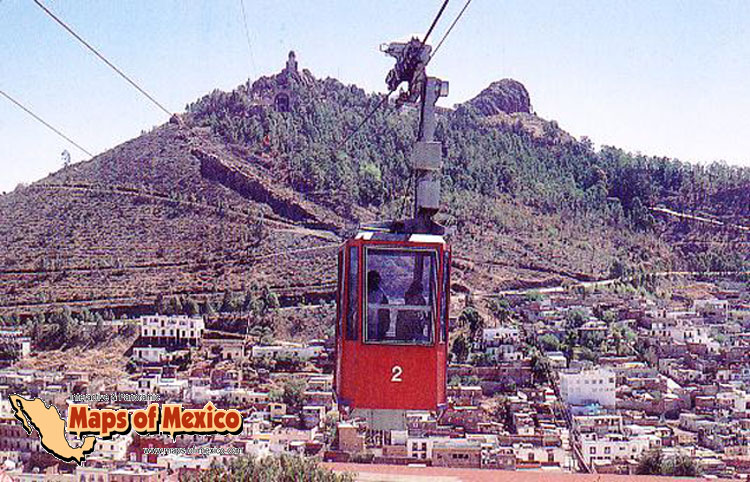
We made the sightseeing rounds the next day. We took a ride on the teleferico, which gave us an awesome panoramic view of the city. We went on a tour of the old silver mine that the city was built around. Our guide showed us some of the natural beauty inside of the caves while explaining the brutality of the conditions for the men, women, and children that worked in them. And after that, we walked the streets while munching on mangoes from street vendors and doing some people watching.
Those daytime walks have since become one of my favorite things to do while traveling. There is a certain magic to the process of simply wandering around for hours, with no specific destination, taking in the sounds and the smells of a new place. The vast array of differences, both subtle and stark, between that new place and the more familiar surroundings of home, have a way of forcing the mind to open up. Because it's not so easy to put your head down and go through the motions of your day, when you can't quite recognize most of what is happening around you.
Something as simple as a search for helpful landmarks or an attempt to use a few new words from a foreign tongue, can get the wheels turning. And then little by little, the things that you do know begin to give way to the things that you don't know. You stop seeing passersby as a lump of motion, predefined and categorized in your mind. And you begin to see the individual expressions on the faces of the people that you pass. You may notice an odd gait on another walker, or you may take a moment to consider the intensity with which a small child can explore a patch of dirt. You might take in the woodwork on a door frame, rather than just passing through the door without a thought. Even something as common and mundane as a piece of litter, or the lack thereof, can spawn speculation about the environment in which you stand.
Whatever form it takes, the awakening that travel can help facilitate is a priceless experience. And this is where I began to make that discovery.
After a couple more days in Zacatecas, we made our way to Guanajuato. Guanajuato greeted us with yet another hostel with a rooftop patio. This hostel had a different feel to it though. It was significantly more quiet, but it was a peaceful, rather than an oppressive, quiet. The building was at the top of a small hill, at the end of a series of alleyways and narrow passages. Even the main street at the bottom of the hill was closed to automobile traffic because of construction, which just added to the quiet and out of the way tone of the place.
The man that owned and operated the hostel was in his 50s. In the evenings, he came up to the rooftop and put some lean and stringy meat on the grill for his boarders. We bought caguamas from a store down the hill, and again spent some time exchanging stories with the other travelers. There were a couple of Americans that were regulars on the rooftop. One was a twentyish college kid with too much Dave Matthews on his ipod, and the other was a middle-aged man from San Francisco named Noonan. Both were in town for several months as students.
Noonan had a zeal for story telling that was eclipsed only by the laughter that was always brimming among his words and that often erupted from his belly, overtaking him and everything around him. Whether we were on the rooftop with him, or tucked away in our room around the corner, there was never any doubt as to whether Noonan was around.
The hostel's owner, whose name I can't remember, was a great help to us. From the rooftop, he was able to point out different destinations and points of interest around the city. Using that perch, he guided us to museums, statues, and old churches. And he showed us were we could get a hot breakfast and catch a World Cup match at six in the morning.
The city itself also held a number of pleasant and/or interesting discoveries. Many of which we were unaware of when we arrived.
We found El Museo De Las Momias on our second day there. The mummies that lined the halls of the museum were both fascinating and disturbing, and at least a little morbidly humorous as well. Wires were used to hold the bodies in the desired positions, and some still wore clothing that seemed strangely well preserved considering the century and a half or so that had passed.
Not long after leaving that museum I ate the best damn torta I have ever had. We were eating at a small lunch counter that couldn't have fit more than four people. And whether it was the fresh bread and produce, the buzz of the trip, or some combination of the two, that sandwich was amazing. If I ever find myself back in Guanajuato, finding that little lunch counter will be at the top of my itinerary.
We had plenty of aimless daytime wanderings and nighttime bar hopping in Guanajuato as well. We found the world's largest bags of cheese puffs. We met more people. A group of teenagers from the city of Puebla taught us a new drinking game, which I think translated into "keep telling that chubby American guy that he has to take another drink". We found karaoke. And eventually made our way onto a late night dance floor.
But after a few days of that, we got back on the bus. The next ride was quite a bit shorter than the first two. We had made it pretty far south already. And as we moved in that direction, I noticed a number of changes in our surroundings.
 The countryside in between the towns and cities became more heavily populated. The deserts of the north were replaced with rolling hills. Some of the land was crudely farmed and roadside produce stands spotted the highway. Political billboards sprouted up. The red and yellow of the PRD/PT alliance, virtually nonexistent in the north, was now inescapable. On the outskirts of some towns, goat herders and burro-pulled carts passed among the piles of used tires and broken toilets that littered the ground. Near other towns, the land was noticeably cleaner and more green. The broad hills sometimes covered with healthy looking farms, or low and wide trees and enormous cacti.
And then we arrived in Queretaro. A big, bustling city, complete with the noise, congestion, and chaos that often contribute to the electricity that only the world's larger urban areas seem capable of producing. We didn't find any vacancies at the first few hostels we went to in Queretaro, so we decided to settle in at a cheap, and somewhat seedy, hotel instead. It couldn't have been a better fit for that weekend. And with that development, I saw the birth of one of the most valuable lessons I've taken from the traveling that I've done over the last five years. Which is that, things will not always work out the way that you planned, but things will always work out.
"The sun has yet to climb the hills into the sky, but the town has begun to stir. Uphill somewhere, a rooster has been crowing for the last twenty minutes. Two European backpackers leave the hostel and march up the brick/stone street towards the bus station, preparing to leave the sleeping town behind. A stray cat sifts through a bag of garbage until he is interrupted by the garbage truck. Though far smaller and without the loud machinery and warning beeps of its American counterpart, the small white pick-up truck rumbles to a thundering halt, and the sound of its engine echos off the concrete walls of the small colonial era buildings.
With the chiming of the church bells the sky turns a lighter shade of blue, as if awakening instantly to an alarm that has sounded every morning for several hundred years. And on cue, the sounds of a waking town join in. The clink of bottles from an upstairs apartment. The sounds of footsteps along the walkway. A baby crying in the distance. Traffic noise becomes more constant. Doors and windows open, and heads peak out to assure themselves that all is as it should be. A pack of dogs trot down the street, trying to sniff out scraps that the garbage men, or the cat before them, may have overlooked. And the chirping and tweeting of hungry birds fills the sky until they are overtaken by yet more church bells. This time, louder and more numerous, the sounds of the bells crash throughout the town, insisting that those who missed the first call rise and join the new day."
I wrote that in my notebook while sitting outside on the hillside steps of a sidewalk in Zacatecas. I'd gotten up early that morning to go for a walk. I'd been in Mexico for a few days, and I was experiencing the wonderful way in which traveling to an unfamiliar environment can awaken the senses and fill the head with a romantic haze.
I'd done a fair amount of traveling before that. I'd been on road trips throughout the U.S. as a child and as an adult. And I'd ventured into border towns like Tijuana and Nuevo Laredo, to take advantage of the nightlife. But this trip was different.
I was with two of my closest friends, Jason and Joe, and we had almost two weeks to explore interior Mexico. We started up north in Monterrey, and then moved south to Zacatecas and Guanajuato, before finishing up in Queretaro and Mexico City, and eventually going back to Monterrey. My friend Jason was living in Monterrey at the time, so we had the benefit of his previous travels throughout the country, as well as the tips and suggestions that he'd received from other people that he'd met there. That additional source of information, more than anything else, helped shape the format of that trip. And that trip in turn, prompted a major shift in how I viewed travel in general.
We made our way around the country by bus. For a fraction of the cost of a slow and uncomfortable bus ride in the States, we got big comfortable seats, were given complimentary sandwiches and cans of pop, and direct routes with minimal stops. The buses were equipped with TVs that played bad movies, like George of the Jungle 2 and Daredevil, in Spanish. And as we rode them, we got the chance to take in the scenery.
In northern Mexico, we rode through the empty desert for hours on end. The differing shades of brown dirt and grey rocks, were the only colors outside of our bus. It was like riding through the remains of an old black and white movie, with all of the props having been rounded up and taken away years before. I remember seeing storms far off in the distance, but they never caught us.
When we arrived in Zacatecas, it was early evening. We went directly to a hostel that had been recommended by one of Jason's co-workers. I never wrote down the name of the place, but it remains one my favorites on an ever growing list of temporary homes that I've settled into while traveling.
When we stepped into the old building that housed the hostel, we were greeted by a young man by the name of Ernesto. I don't remember much about Ernesto or his life outside of that job, though we did talk a little about that. But I do remember that he was an eager host. After we dropped our bags in our room, he took us on a tour of the small property. He asked us where we were coming from and how long we'd be in Zacatecas, and he talked about the city's people and history with an open and sincere affection. He showed us the refrigerator full of beer that was available for the hostel's guests, and explained that the tab was tallied up on the honor system. And then finally, he took us to the rooftop, where other lodgers would gather, usually with several of those beers, and take in the view of the city while trading travel stories and offering suggestions on what to see and do down the road.
We started off the evening on that rooftop, but were soon out on the cobblestone streets. We wandered from one landmark to another. An old church here, and an old tavern there. And as we walked, we kept running into small bands of boisterous revelers. We'd usually see a couple dozen to a group, but sometimes more. They had trumpets and guitars, bottles of tequila, and small ceramic cups hanging from pieces of string around their necks. Anywhere we walked, we heard their laughter and their songs bouncing around us.
Once we made friends with one of the groups, we learned that these were politically motivated gatherings. The federal elections were just days away, and the celebrations were a sort of "Get Out The Vote" campaign for the candidates/parties that our new friends were supporting. A big part of me was quite interested in the political aspect of the tradition that we had stumbled upon. But the general feeling that I got from the people around me was casual and carefree, so I let my inquiries go and I embraced the music and tequila side of the party instead.
We spent the rest of that evening on the streets and in the taverns. For the first time, I used a urinal while taking in a full view of the bar, and allowing the bar an almost full view of me. (That particular bar had crossed the gender barrier years before, so there were small saloon style doors separating the urinal from the rest of the room. And the location and visibility of that urinal did seem like a relic that was held onto for its novelty, in order to help the 100+ year old tavern capitalize on the tourist trade. But some of the darker and dingier bars that I discovered in Mexico had not yet crossed that barrier and were far less discreet.) We met a handful of other travelers, including a tattooed girl from Brooklyn that had a wonderful passion for Heavy Metal and was carrying around a donkey skull in a hefty bag. And eventually we made our way back to the rooftop, opened one last beer, and wound down with some quiet conversation under the big desert sky.
 |
| Joe, me, and Jason. Outside of El Eden Mine. Zacatecas. |
Those daytime walks have since become one of my favorite things to do while traveling. There is a certain magic to the process of simply wandering around for hours, with no specific destination, taking in the sounds and the smells of a new place. The vast array of differences, both subtle and stark, between that new place and the more familiar surroundings of home, have a way of forcing the mind to open up. Because it's not so easy to put your head down and go through the motions of your day, when you can't quite recognize most of what is happening around you.
 |
| Me and Sancho Panza on the left. Jason and Don Quixote on the right. Guanajuato |
Whatever form it takes, the awakening that travel can help facilitate is a priceless experience. And this is where I began to make that discovery.
After a couple more days in Zacatecas, we made our way to Guanajuato. Guanajuato greeted us with yet another hostel with a rooftop patio. This hostel had a different feel to it though. It was significantly more quiet, but it was a peaceful, rather than an oppressive, quiet. The building was at the top of a small hill, at the end of a series of alleyways and narrow passages. Even the main street at the bottom of the hill was closed to automobile traffic because of construction, which just added to the quiet and out of the way tone of the place.
The man that owned and operated the hostel was in his 50s. In the evenings, he came up to the rooftop and put some lean and stringy meat on the grill for his boarders. We bought caguamas from a store down the hill, and again spent some time exchanging stories with the other travelers. There were a couple of Americans that were regulars on the rooftop. One was a twentyish college kid with too much Dave Matthews on his ipod, and the other was a middle-aged man from San Francisco named Noonan. Both were in town for several months as students.
Noonan had a zeal for story telling that was eclipsed only by the laughter that was always brimming among his words and that often erupted from his belly, overtaking him and everything around him. Whether we were on the rooftop with him, or tucked away in our room around the corner, there was never any doubt as to whether Noonan was around.
The hostel's owner, whose name I can't remember, was a great help to us. From the rooftop, he was able to point out different destinations and points of interest around the city. Using that perch, he guided us to museums, statues, and old churches. And he showed us were we could get a hot breakfast and catch a World Cup match at six in the morning.
The city itself also held a number of pleasant and/or interesting discoveries. Many of which we were unaware of when we arrived.
We found El Museo De Las Momias on our second day there. The mummies that lined the halls of the museum were both fascinating and disturbing, and at least a little morbidly humorous as well. Wires were used to hold the bodies in the desired positions, and some still wore clothing that seemed strangely well preserved considering the century and a half or so that had passed.
Not long after leaving that museum I ate the best damn torta I have ever had. We were eating at a small lunch counter that couldn't have fit more than four people. And whether it was the fresh bread and produce, the buzz of the trip, or some combination of the two, that sandwich was amazing. If I ever find myself back in Guanajuato, finding that little lunch counter will be at the top of my itinerary.
 |
| Joe, me, and the puffs. |
But after a few days of that, we got back on the bus. The next ride was quite a bit shorter than the first two. We had made it pretty far south already. And as we moved in that direction, I noticed a number of changes in our surroundings.

And then we arrived in Queretaro. A big, bustling city, complete with the noise, congestion, and chaos that often contribute to the electricity that only the world's larger urban areas seem capable of producing. We didn't find any vacancies at the first few hostels we went to in Queretaro, so we decided to settle in at a cheap, and somewhat seedy, hotel instead. It couldn't have been a better fit for that weekend. And with that development, I saw the birth of one of the most valuable lessons I've taken from the traveling that I've done over the last five years. Which is that, things will not always work out the way that you planned, but things will always work out.
Sunday, July 3, 2011
Marathon #5, 6, &7 - Cleveland, Ohio - Memphis, Tennessee - Prague, Czech Republic
5, 6, & 7) Cleveland, Memphis, and Prague
I've already posted my reflections on the Cleveland Marathon, and I don't want to repeat myself. But I would like to reflect on the whole of my experience with marathons over the last few years. And I'd also like to take a moment to try to frame my thoughts on what lies ahead.
Over the last 29 months, I've run five marathons. Because of that, I am in better physical condition than I've ever been in, in my life. I just turned 37 years old, and I feel better than I did 15 years ago. I've also used long distance runs to explore the city in which I live, and the places that I visit, in a way that I never could before. Countless new angles on the world around me have opened up through my wanderings. Running has helped me gain new insights into other individual people as well. Through talking with, and running with, other runners, I have learned more about their personal struggles and the ways in which they've worked through them. And I've learned things about myself, both positive and negative, that I don't believe I could have discovered any other way.
Running marathons has been the single best thing that I've done for myself in my life. And I am awed by the idea that there is much more to come.
I am going to run my sixth marathon exactly five months from today, in Memphis. From this vantage point, its difficult to say what exactly my goals will be for that race. I'll be able to get a more clear view of that when the training gets heavy this fall. But I'm looking forward to taking everything that that experience has to offer. And I plan to shave a number of minutes from the clock in the process.
Five months after Memphis, I'll be running a marathon in Prague. A good friend of mine is moving there, and I can't wait to explore the city with him, and with that race course.
In the meantime, I'll find a few shorter races to enjoy, and I'll also have countless other runs that don't involve a clock or any planned course at all. But I'm going to keep those marathons, both past and future, with me the whole way. Because that is where the prize is kept. That is where the growth and the light live. And even though I sometimes need to rest, that is the direction in which I always want to be moving.
I've already posted my reflections on the Cleveland Marathon, and I don't want to repeat myself. But I would like to reflect on the whole of my experience with marathons over the last few years. And I'd also like to take a moment to try to frame my thoughts on what lies ahead.
Over the last 29 months, I've run five marathons. Because of that, I am in better physical condition than I've ever been in, in my life. I just turned 37 years old, and I feel better than I did 15 years ago. I've also used long distance runs to explore the city in which I live, and the places that I visit, in a way that I never could before. Countless new angles on the world around me have opened up through my wanderings. Running has helped me gain new insights into other individual people as well. Through talking with, and running with, other runners, I have learned more about their personal struggles and the ways in which they've worked through them. And I've learned things about myself, both positive and negative, that I don't believe I could have discovered any other way.
Running marathons has been the single best thing that I've done for myself in my life. And I am awed by the idea that there is much more to come.
I am going to run my sixth marathon exactly five months from today, in Memphis. From this vantage point, its difficult to say what exactly my goals will be for that race. I'll be able to get a more clear view of that when the training gets heavy this fall. But I'm looking forward to taking everything that that experience has to offer. And I plan to shave a number of minutes from the clock in the process.
Five months after Memphis, I'll be running a marathon in Prague. A good friend of mine is moving there, and I can't wait to explore the city with him, and with that race course.
In the meantime, I'll find a few shorter races to enjoy, and I'll also have countless other runs that don't involve a clock or any planned course at all. But I'm going to keep those marathons, both past and future, with me the whole way. Because that is where the prize is kept. That is where the growth and the light live. And even though I sometimes need to rest, that is the direction in which I always want to be moving.
Saturday, July 2, 2011
Marathon #4 - Maui, Hawaii
4) Maui
I ran my fourth marathon in Maui on January 23, 2011. My finishing time was 4:26:28. My heart wasn't in this one. It wasn't in the preparation, and it wasn't there on race day.
I had some good races in between Berlin and Maui. I ran a 15k here in Chicago, and a half-marathon in San Antonio. I averaged 6:54 per mile in the 15k, which is the fastest pace I've ever had for any race. And one week later in San Antonio, I was able to finish the half-marathon in 1:35:03, which was also a personal best for that distance. And after I finished the race in San Antonio, I got the chance to cheer on a good friend as she ran her first full length marathon on that same course.
But as much as those races helped me put the more negative aspects of Berlin behind me, I just couldn't seem to get myself excited about running in Maui. While training, I ran more than 15 miles only twice. But I'd already registered, and bought the plane ticket, so I was going to Maui regardless.
The Maui Oceanfront Marathon is a small race. Just a few hundred participants, no full road closures after the first couple of miles, and no digital timing system. We started in a residential area, well before dawn, but we were quickly on the coast, which is where we stayed until the final mile or so.
I felt great early on. I was moving fast and enjoying the scenery. But as the miles added up, it became clear that I hadn't prepared myself properly. And aside from the general fatigue, which was settling in earlier than I would have liked, I was getting pain in my ankles and calves that I believe came from the slant in the road.
We were running around mountains, and the ground wasn't flat. The more steps I took on the uneven roadside, the more sharp the pain became. I slowed down as the pain increased, and I was fine with that. I knew before the gun went off that this probably wouldn't be my fastest race. And so I was fine with settling into an easy pace and just taking in my surroundings.
But not all of that pain was a result of running on a surface that tilted inward. Much of it stemmed from my lack of training. And I can't leave that fact out of any honest account of that race.
By the time I finished, I was hurting pretty badly. I didn't really care about the time, but given the pain, I certainly couldn't say that I enjoyed myself during the second half of that race. So once again, I found myself with some questions to answer, once everything had come to an end.
Running 26.2 miles isn't something to be taken lightly, and I'd somehow lost sight of that. There are plenty of shorter races that I can run, and enjoy, if I'm not feeling up to training for a full marathon. So I need to make sure that I'm honest with myself about how much I am willing to commit to each race that I choose. And if I'm not ready to set everything else aside for a few months, so that I can give myself over to training, then I'm not ready to run a marathon.
But after Maui, I was definitely ready to dedicate myself to several months of serious training. I'd had two straight races in which I couldn't be honestly happy about the way in which I approached them mentally and physically. And I was suddenly quite anxious to wash that sour taste out of my mouth.
My next race was going to be much closer to home. And while I always look forward to exploring new cities, I wasn't looking at the next race as a vacation. Cleveland was three and a half months away, and that was going to be a business trip.
I ran my fourth marathon in Maui on January 23, 2011. My finishing time was 4:26:28. My heart wasn't in this one. It wasn't in the preparation, and it wasn't there on race day.
I had some good races in between Berlin and Maui. I ran a 15k here in Chicago, and a half-marathon in San Antonio. I averaged 6:54 per mile in the 15k, which is the fastest pace I've ever had for any race. And one week later in San Antonio, I was able to finish the half-marathon in 1:35:03, which was also a personal best for that distance. And after I finished the race in San Antonio, I got the chance to cheer on a good friend as she ran her first full length marathon on that same course.
But as much as those races helped me put the more negative aspects of Berlin behind me, I just couldn't seem to get myself excited about running in Maui. While training, I ran more than 15 miles only twice. But I'd already registered, and bought the plane ticket, so I was going to Maui regardless.
The Maui Oceanfront Marathon is a small race. Just a few hundred participants, no full road closures after the first couple of miles, and no digital timing system. We started in a residential area, well before dawn, but we were quickly on the coast, which is where we stayed until the final mile or so.
I felt great early on. I was moving fast and enjoying the scenery. But as the miles added up, it became clear that I hadn't prepared myself properly. And aside from the general fatigue, which was settling in earlier than I would have liked, I was getting pain in my ankles and calves that I believe came from the slant in the road.
We were running around mountains, and the ground wasn't flat. The more steps I took on the uneven roadside, the more sharp the pain became. I slowed down as the pain increased, and I was fine with that. I knew before the gun went off that this probably wouldn't be my fastest race. And so I was fine with settling into an easy pace and just taking in my surroundings.
But not all of that pain was a result of running on a surface that tilted inward. Much of it stemmed from my lack of training. And I can't leave that fact out of any honest account of that race.
By the time I finished, I was hurting pretty badly. I didn't really care about the time, but given the pain, I certainly couldn't say that I enjoyed myself during the second half of that race. So once again, I found myself with some questions to answer, once everything had come to an end.
Running 26.2 miles isn't something to be taken lightly, and I'd somehow lost sight of that. There are plenty of shorter races that I can run, and enjoy, if I'm not feeling up to training for a full marathon. So I need to make sure that I'm honest with myself about how much I am willing to commit to each race that I choose. And if I'm not ready to set everything else aside for a few months, so that I can give myself over to training, then I'm not ready to run a marathon.
But after Maui, I was definitely ready to dedicate myself to several months of serious training. I'd had two straight races in which I couldn't be honestly happy about the way in which I approached them mentally and physically. And I was suddenly quite anxious to wash that sour taste out of my mouth.
My next race was going to be much closer to home. And while I always look forward to exploring new cities, I wasn't looking at the next race as a vacation. Cleveland was three and a half months away, and that was going to be a business trip.
Tuesday, June 28, 2011
Marathon #3 - Berlin, Germany
3) Berlin
I ran my third marathon in Berlin on September 26, 2010. My finishing time was 3:43:17. When I crossed the Finish Line, I was a physical and emotional wreck.
I got out of bed at 4:00 am on race day. The hotel was quiet and still when I left the room thirty minutes later. The race was scheduled to start at 9:00 am.
I went down to the lobby to get some coffee, and eat breakfast. I sat down at a small table near the window that looked out on the cool rain that was washing the East Berlin street, and I wrote in my notebook:
"I feel good about the race. I went for a run on Friday morning and my legs felt fresh and strong. And it felt great to run in the cool air. It's been a long, hot summer in Chicago. I've got the same picture of Kevin in my pocket that I carried in each of the first two marathons. I'll also have dad in my thoughts. He ran a 5k yesterday which included a free prostate screening among its goodie bag items. He (and of course we) is hoping that the cancer has receded and that he'll be able to avoid invasive surgery. Aside from how much I want to qualify for Boston today for myself, I'd also love for him to see me enjoy that level of success with my running. I know he'd get a lot from that."
When the first trickle of runners spread into the lobby, I packed up my things and began making my way to the Start Line in Tiergarten Park. I remembered the crowds for the Chicago Marathon, and while I had the benefit of a seeded corral this time, I also had a language barrier to work through and I was in a city that was unfamiliar to me. So rather than risk the frustration of a last minute scramble to find my corral, I decided to get an early start.
The rain had eased up when I left the hotel, so I walked for a bit. It was cold out that morning, and I found myself wishing that I'd brought some throw-away sweats from a thrift store. There were tall rectangular apartment buildings lining the streets. They were all still dark. The only noticeable sign of life was the occasional Saturday night bar patron, shuffling their way home before the daylight made Sunday morning official. I saw a train approaching, and I hopped on.
I had done everything I'd set out to do in the months leading up to the race. Everything that I did in July, August, and September revolved around this marathon. I put my social life on hold. I organized my work schedule to fit my training schedule. I followed strict dietary rules. For three months, there wasn't a half an hour that went by without me thinking about Berlin.
I felt good as I made my way through the park. The rain had picked back up though, and there wasn't any shelter to be had. So I told myself to just accept the fact that I'd be cold and wet, and to put it out of my mind and move on. Once the race got started, I'd be running hard, and I'd get warmed up, and everything would be fine.
In the meantime, I waited. I stretched. I stood under trees. I watched other runners mill around. I waited. I tried not to think about the rain that had been falling off and on for the last 24 hours. I tried to ignore the standing water in the streets and in the lawns of the park. I tried to put my cold and wet body, and my wet and heavy clothes, out of my head.
I tried all of that in vain. As 9:00 am approached, I was spending far too much time wishing that things were other than they were.
And then the starting gun went off.
We started off so fast. Seven minute miles right out of the gate. I'd never felt a starting pace like that in any race that was longer than a 10k. I was in a corral near the front and this was an all business crowd. I quickly shed my thoughts about the weather and all of the other factors that were out of my control, and I just ran. I had every intention of proving that this was were I belonged.
But in the back of my mind, I was already worried. My legs were heavy. The strong and fresh feeling that I'd had just a couple of days before, wasn't there that morning. Early on, I told myself that I'd warm up after a couple of miles. But the first few miles of the race came and went, and nothing changed. By the 10k mark, I knew in my head that I couldn't hold the pace that I was at. I knew that if I didn't slow down, I was going to crash.
I didn't slow down though. I'd put in too much work to get ready for that race. And I'd tied every bit of that preparation to the idea of qualifying for Boston. I told myself that I'd find a way to push through.
I didn't push through though. By the half way point I was already unraveling. My legs were on fire and I was slowing down. I watched other runners pass me by. First by the dozens, then by the hundreds. By the time I hit the 25k mark, it was over. I had another 17k to go, I was in a lot of pain, and Boston was out of the question.
I went through a wide range of emotions over that final ninety minutes. Initially, I was frustrated and angry, and I felt sorry for myself. And then I tried to shift my focus. I wasn't going to qualify for Boston, but I could still beat my Chicago time. I could still PR. And I reminded myself that I was still running the Berlin Marathon, and that I should be embracing that experience, because I probably wouldn't ever do it again.
But as the race wore on, the pain became more severe, and I couldn't find a way to keep my focus positive. I shuffled along, but I was desperate for it to be over.
And then, finally, it was over. I turned the last corner and I saw the Finish Line from several blocks away. My legs were stiff, but I pushed them as hard as I could. I crossed the Finish Line more than thirty minutes past the time that I'd hoped for, and my eyes filled up with tears as I accepted the Finisher's Medal. I'd given everything that I had to that race, and somehow I'd actually gotten slower.
I spent the better part of the next 24 hours feeling sorry for myself. I went through the post race motions. I ate delicious greasy food. I drank cold beer. I had ice cream for breakfast the next day. But I wasn't happy with the way things had gone. I did eventually snap out of it, and enjoy the rest of my trip. But I had a lot to reflect upon. I knew that I had a lot to take from the experience, and I knew that it was important that I do that.
Some of the problems that I encountered were out of my control. And in hindsight, I don't think that there was any scenario in which I would have qualified for Boston that day. That is a longer and more difficult process than I had recognized. However, there were things that were within my control. There were things that I could have done differently, that would have made the experience a more enjoyable one.
Most notably, I knew that I needed to change my mental approach. I can't limit my ideas of success and failure to the numbers on a clock. The clock can help me in my assessment of myself, but that's all it's there for. It's just a tool. It's not a goal in and of itself. And I knew that I needed to be more honest with myself about my ability. Even if I'd been warm and dry and had fresh legs, I wasn't physically ready to qualify for Boston. And I knew that I needed to make better decisions during the race. Had I slowed down early in the race, I would have lasted longer, finished faster, and had a more enjoyable overall experience.
So I tried to take those lessons with me, while setting everything else down and moving on. Berlin was finished, and I had more races on the horizon.
I ran my third marathon in Berlin on September 26, 2010. My finishing time was 3:43:17. When I crossed the Finish Line, I was a physical and emotional wreck.
I got out of bed at 4:00 am on race day. The hotel was quiet and still when I left the room thirty minutes later. The race was scheduled to start at 9:00 am.
I went down to the lobby to get some coffee, and eat breakfast. I sat down at a small table near the window that looked out on the cool rain that was washing the East Berlin street, and I wrote in my notebook:
"I feel good about the race. I went for a run on Friday morning and my legs felt fresh and strong. And it felt great to run in the cool air. It's been a long, hot summer in Chicago. I've got the same picture of Kevin in my pocket that I carried in each of the first two marathons. I'll also have dad in my thoughts. He ran a 5k yesterday which included a free prostate screening among its goodie bag items. He (and of course we) is hoping that the cancer has receded and that he'll be able to avoid invasive surgery. Aside from how much I want to qualify for Boston today for myself, I'd also love for him to see me enjoy that level of success with my running. I know he'd get a lot from that."
When the first trickle of runners spread into the lobby, I packed up my things and began making my way to the Start Line in Tiergarten Park. I remembered the crowds for the Chicago Marathon, and while I had the benefit of a seeded corral this time, I also had a language barrier to work through and I was in a city that was unfamiliar to me. So rather than risk the frustration of a last minute scramble to find my corral, I decided to get an early start.
The rain had eased up when I left the hotel, so I walked for a bit. It was cold out that morning, and I found myself wishing that I'd brought some throw-away sweats from a thrift store. There were tall rectangular apartment buildings lining the streets. They were all still dark. The only noticeable sign of life was the occasional Saturday night bar patron, shuffling their way home before the daylight made Sunday morning official. I saw a train approaching, and I hopped on.
I had done everything I'd set out to do in the months leading up to the race. Everything that I did in July, August, and September revolved around this marathon. I put my social life on hold. I organized my work schedule to fit my training schedule. I followed strict dietary rules. For three months, there wasn't a half an hour that went by without me thinking about Berlin.
I felt good as I made my way through the park. The rain had picked back up though, and there wasn't any shelter to be had. So I told myself to just accept the fact that I'd be cold and wet, and to put it out of my mind and move on. Once the race got started, I'd be running hard, and I'd get warmed up, and everything would be fine.
In the meantime, I waited. I stretched. I stood under trees. I watched other runners mill around. I waited. I tried not to think about the rain that had been falling off and on for the last 24 hours. I tried to ignore the standing water in the streets and in the lawns of the park. I tried to put my cold and wet body, and my wet and heavy clothes, out of my head.
I tried all of that in vain. As 9:00 am approached, I was spending far too much time wishing that things were other than they were.
And then the starting gun went off.
We started off so fast. Seven minute miles right out of the gate. I'd never felt a starting pace like that in any race that was longer than a 10k. I was in a corral near the front and this was an all business crowd. I quickly shed my thoughts about the weather and all of the other factors that were out of my control, and I just ran. I had every intention of proving that this was were I belonged.
 |
| Me in the white shirt and dark shorts. About Mile 6. |
I didn't slow down though. I'd put in too much work to get ready for that race. And I'd tied every bit of that preparation to the idea of qualifying for Boston. I told myself that I'd find a way to push through.
I didn't push through though. By the half way point I was already unraveling. My legs were on fire and I was slowing down. I watched other runners pass me by. First by the dozens, then by the hundreds. By the time I hit the 25k mark, it was over. I had another 17k to go, I was in a lot of pain, and Boston was out of the question.
I went through a wide range of emotions over that final ninety minutes. Initially, I was frustrated and angry, and I felt sorry for myself. And then I tried to shift my focus. I wasn't going to qualify for Boston, but I could still beat my Chicago time. I could still PR. And I reminded myself that I was still running the Berlin Marathon, and that I should be embracing that experience, because I probably wouldn't ever do it again.
But as the race wore on, the pain became more severe, and I couldn't find a way to keep my focus positive. I shuffled along, but I was desperate for it to be over.
And then, finally, it was over. I turned the last corner and I saw the Finish Line from several blocks away. My legs were stiff, but I pushed them as hard as I could. I crossed the Finish Line more than thirty minutes past the time that I'd hoped for, and my eyes filled up with tears as I accepted the Finisher's Medal. I'd given everything that I had to that race, and somehow I'd actually gotten slower.
I spent the better part of the next 24 hours feeling sorry for myself. I went through the post race motions. I ate delicious greasy food. I drank cold beer. I had ice cream for breakfast the next day. But I wasn't happy with the way things had gone. I did eventually snap out of it, and enjoy the rest of my trip. But I had a lot to reflect upon. I knew that I had a lot to take from the experience, and I knew that it was important that I do that.
Some of the problems that I encountered were out of my control. And in hindsight, I don't think that there was any scenario in which I would have qualified for Boston that day. That is a longer and more difficult process than I had recognized. However, there were things that were within my control. There were things that I could have done differently, that would have made the experience a more enjoyable one.
Most notably, I knew that I needed to change my mental approach. I can't limit my ideas of success and failure to the numbers on a clock. The clock can help me in my assessment of myself, but that's all it's there for. It's just a tool. It's not a goal in and of itself. And I knew that I needed to be more honest with myself about my ability. Even if I'd been warm and dry and had fresh legs, I wasn't physically ready to qualify for Boston. And I knew that I needed to make better decisions during the race. Had I slowed down early in the race, I would have lasted longer, finished faster, and had a more enjoyable overall experience.
So I tried to take those lessons with me, while setting everything else down and moving on. Berlin was finished, and I had more races on the horizon.
Saturday, June 25, 2011
Marathon #3 Postponed - Minneapolis, Minnesota
2.5) Minneapolis
Going into 2010, my plan was to run two marathons. The first was slated for June 6, 2010 in Minneapolis. I made it to the race in Minneapolis. And I enjoyed the experience on the whole. But I did not run the full marathon. I ran the half-marathon, and my time was 1:41:05.
The year started off well. I had taken it pretty easy over the holidays, but by January I was back in training mode. I was building up my weekly mile totals, and I was doing more cross training. Running still dominated my training schedule, but weights and swimming became staples as well.
I was excited about Minneapolis. It wasn't the race that I saw myself qualifying for Boston with. I was going to shoot for that later in the year. But I knew that I'd be stronger and faster than I was in Chicago, and I was looking forward to using Minneapolis to assess my progress.
I was also excited because both of my sisters were coming up from Denver, and they were going to run too. I have one sister that is a couple of years older than me, and another that is thirteen years younger. Both are runners, though neither had run into double digit miles before. So they were both looking at the half-marathon.
But before any of us made it to Minneapolis, I had a detour to take. I went on a month long vacation to Southeast Asia in March. I knew that I would lose some of the cross training while I was gone. But I figured that as long as I stayed somewhat disciplined with the running, I'd be fine. I'd get back to the gym in April, with a full two months left before the race. And in the meantime, I'd use those training runs in Asia, to see places that I would've never seen otherwise.
My first stop was Hanoi. I landed at night, and I fell asleep immediately after I arrived at the hotel. But I didn't sleep long, and when I found myself wide awake well before dawn, I decided to go for my first run of the trip. It ended up being my longest run of the trip too.
I was lost within minutes.
I was initially okay with being lost. I'm pretty confident in my sense of direction, and I'd written the name and address of the hotel on a piece of paper and brought that with me, and I figured that I'd make my way back there eventually. I knew that directions might be a little tough to follow since I don't speak Vietnamese, but people can look at an address and point in a general direction, and eventually that would get me where I needed to go. In the meantime though, I was too excited to see the city to really give a damn that I didn't know where I was.
But as time went on, I became less and less confident that I was heading in the right direction. When I'd left the hotel, the city had still been sleeping. But thirty minutes later, the sun was up and so was the city. Shops opened their doors and pulled their wares onto the sidewalk, traffic erupted and filled the streets, and people were everywhere. Any landmarks that I'd noted as I left the hotel were useless at that point. And after an hour or so of running, I had to accept that I could be miles from the hotel or just a few blocks. I had no way of knowing, and with the language barrier, distance can be tougher to convey than general direction.
So I ran. I walked a little too. And I kept asking for directions, just to be sure that I wasn't running away from the hotel. I did, of course, find it eventually. And I felt quite relieved when it happened. I'd probably been out for two hours by then, so I won't pretend that I never got worried or frustrated. But even with those drawbacks, that was still one of my favorite runs ever.
That was my first, and as of now my only, trip to Asia. And for me, it was a wonderful introduction. I got pretty far off of the beaten path that morning. I ran through neighborhoods that looked nothing like the area that my hotel was in. I got out were people lived and worked. Where kids went to school. Where families interact and people lay their head at night. That's not always an easy thing to find while traveling, but the likelihood increases significantly with running.
I squeezed in a few more of those runs before leaving northern Vietnam. And after that first morning I managed to do it without getting lost.
After that I made my way over to Laos. My first stop in Laos was in Luang Prabang. It's much smaller and more peaceful than Hanoi, and my first run there was beautiful.
I once again went for a run on my first morning in my new surroundings . But I studied the map more closely this time, and I didn't take off until after the sun had come up. And even when I got out of town, it was easy to find my way. I ran on dirt roads and across wooden bridges. I ran along the rivers and I wound through the hills. I'm glad that I got the experience of that rural run in when I did, because it wasn't long after that that I got sick, and had to shelf the running for what I thought would be just a few days.
When I looked at the basket full of dried cuttlefish, I knew that I probably shouldn't eat any. And to be honest, they didn't even look appealing. It wasn't like staring at a basket of cupcakes and thinking that I should pass. It was dried cuttlefish. But I was traveling. And one of my favorite ways to tour a new place is through my taste buds. So I bought a stick of three and I took a bite. It was terrible, but I took a second bite to be sure. Then, confident that each bite would be as bad as the last, and that this would be one taste that I probably would not acquire, I tossed the rest away.
But the damage was done. There were bacteria working their way through me that my body was unfamiliar with, and therefor was poorly equipped to fight. Before the night was out, I was completely incapacitated. My body started to flush everything out, and there was little for me to do but lay in bed and wait it out.
I was able to function again within 24 hours, but I remained weak for several days, and I never let myself get too far from a restroom. On the sixth day, I decided to go for an easy run. I was in Siem Reap, Cambodia by then. I was extremely sluggish, but I couldn't be sure that that was a result of my having been sick. I was moving steadily south by then, and I had also come down in elevation, so the heat was a much bigger factor than it was before the cuttlefish. But I had managed to get in about five miles, and I'd done it without needing to find any facilities. So I definitely took that as a positive.
For the remaining two weeks of that trip, I didn't do a lot of running. I felt more or less capable, but I just didn't do it. I had gotten out of rhythm. I let the heat deter me. And then I just gave up. I told myself that I'd be fine. I'd just chalk it up as a minor setback, and get back to work as soon as I got home.
But shortly after I returned home, I was sick again. It didn't feel like the same sickness, and when I eventually went to see a doctor, he said that it didn't sound related to what I'd experienced in Asia, and that the timing was probably coincidental. But regardless of the cause, it was frustrating.
Throughout the entire month of April, I struggled. I couldn't keep food down, and I was getting weaker by the day. On one particularly rough day, I walked into work and watched as my boss' eyes widened at the sight of me. He quickly looked me up and down, took a cautionary step back, and told me that I should go home.
My lowest point came near the end of April. I tried to go for a five mile run, and I couldn't finish. For the first time since the summer of 2008, when I was just starting out, I had to run/walk a simple five mile route. I was beyond frustrated. I was filled with self-pity and despair. I was a month away from Minneapolis, and I clearly wasn't in any shape to run 26.2 miles. Most of the work that I'd been putting in for nearly two years was gone, and I was back at the start.
That was when I finally went to see the doctor. (I can be a little stubborn with that. I prefer to let my body do its own healing when possible.) We talked about my symptoms, he gave me some pills, and gradually I was able to keep my meals down. I'd lost a lot of muscle. And I was still frustrated. But I was finally able to start moving forward again, and that was an enormous relief.
But I still had to decide what to do with Minneapolis. I hadn't registered for anything yet. I never thought that I would skip the race all together, but I couldn't let go of the possibility that I could get myself through the full marathon. However, after some soul searching and a realistic assessment of my physical condition, I came to terms with the fact that even if I did finish the full marathon, I'd be miserable throughout the experience. And I run because I love to run, not to make myself miserable. So I signed up for the half-marathon, and I hit the pavement.
In the meantime, my younger sister had gotten bogged down with school work, and had decided to skip the trip. She was also going to be taking summer classes, so she would have had to fly home just hours after finishing, in order to be in class on Monday. But my older sister had been training hard to prepare herself, and I was looking forward to sharing the experience of race day with her. (I was also looking forward to sharing the experience of post-race greasy food, cold beer, concerts, and baseball games with her. And we did manage to squeeze all of that in before leaving Minnesota.)
The race itself was fun. Minneapolis is a beautiful city to run in. The course was challenging. It was reasonably flat at first (Though few courses seem truly flat when you're used to running in Chicago.), but it became quite hilly once we started running along the Mississippi River. But mostly I was just grateful to be running again.
And I was elated to have the chance to see my sister cross the Finish Line at her first half-marathon. She ran it in 2:46:39, earning every ounce of the food and beer that we put down later that afternoon. Since then, she's found other ways to embrace the spirit of the sport. This past winter, she completed a five race winter running series in Colorado. (My little sister did four of those with her.) And this coming October she'll be running another half-marathon, this time at home in Denver.
When I got back to Chicago, I had to acknowledge that I was a long way from attempting a Boston Qualifying run. The base that I'd built up was gone. And I had less than four months to change that. But I had already signed up for my next full marathon. And this one was going to be on a course that has been called the fastest course in the world. So I sat down with a pen and paper, and I made a list of all of my regular habits that have an effect on my health. And I made decisions about what would make me stronger, and what would only slow me done. If it fell in the latter category, it was gone. It it fell in the former category, I was going to do a lot of it. Clean and simple. Four months of pushing myself hard. I knew I couldn't guarantee that I'd qualify, but I felt that I could guarantee that by the time I landed in Berlin, I'd be in the best shape of my life, and ready to give it everything that I had in me.
Going into 2010, my plan was to run two marathons. The first was slated for June 6, 2010 in Minneapolis. I made it to the race in Minneapolis. And I enjoyed the experience on the whole. But I did not run the full marathon. I ran the half-marathon, and my time was 1:41:05.
The year started off well. I had taken it pretty easy over the holidays, but by January I was back in training mode. I was building up my weekly mile totals, and I was doing more cross training. Running still dominated my training schedule, but weights and swimming became staples as well.
I was excited about Minneapolis. It wasn't the race that I saw myself qualifying for Boston with. I was going to shoot for that later in the year. But I knew that I'd be stronger and faster than I was in Chicago, and I was looking forward to using Minneapolis to assess my progress.
I was also excited because both of my sisters were coming up from Denver, and they were going to run too. I have one sister that is a couple of years older than me, and another that is thirteen years younger. Both are runners, though neither had run into double digit miles before. So they were both looking at the half-marathon.
But before any of us made it to Minneapolis, I had a detour to take. I went on a month long vacation to Southeast Asia in March. I knew that I would lose some of the cross training while I was gone. But I figured that as long as I stayed somewhat disciplined with the running, I'd be fine. I'd get back to the gym in April, with a full two months left before the race. And in the meantime, I'd use those training runs in Asia, to see places that I would've never seen otherwise.
My first stop was Hanoi. I landed at night, and I fell asleep immediately after I arrived at the hotel. But I didn't sleep long, and when I found myself wide awake well before dawn, I decided to go for my first run of the trip. It ended up being my longest run of the trip too.
I was lost within minutes.
I was initially okay with being lost. I'm pretty confident in my sense of direction, and I'd written the name and address of the hotel on a piece of paper and brought that with me, and I figured that I'd make my way back there eventually. I knew that directions might be a little tough to follow since I don't speak Vietnamese, but people can look at an address and point in a general direction, and eventually that would get me where I needed to go. In the meantime though, I was too excited to see the city to really give a damn that I didn't know where I was.
But as time went on, I became less and less confident that I was heading in the right direction. When I'd left the hotel, the city had still been sleeping. But thirty minutes later, the sun was up and so was the city. Shops opened their doors and pulled their wares onto the sidewalk, traffic erupted and filled the streets, and people were everywhere. Any landmarks that I'd noted as I left the hotel were useless at that point. And after an hour or so of running, I had to accept that I could be miles from the hotel or just a few blocks. I had no way of knowing, and with the language barrier, distance can be tougher to convey than general direction.
So I ran. I walked a little too. And I kept asking for directions, just to be sure that I wasn't running away from the hotel. I did, of course, find it eventually. And I felt quite relieved when it happened. I'd probably been out for two hours by then, so I won't pretend that I never got worried or frustrated. But even with those drawbacks, that was still one of my favorite runs ever.
That was my first, and as of now my only, trip to Asia. And for me, it was a wonderful introduction. I got pretty far off of the beaten path that morning. I ran through neighborhoods that looked nothing like the area that my hotel was in. I got out were people lived and worked. Where kids went to school. Where families interact and people lay their head at night. That's not always an easy thing to find while traveling, but the likelihood increases significantly with running.
I squeezed in a few more of those runs before leaving northern Vietnam. And after that first morning I managed to do it without getting lost.
After that I made my way over to Laos. My first stop in Laos was in Luang Prabang. It's much smaller and more peaceful than Hanoi, and my first run there was beautiful.
 |
| Luang Prabang |
When I looked at the basket full of dried cuttlefish, I knew that I probably shouldn't eat any. And to be honest, they didn't even look appealing. It wasn't like staring at a basket of cupcakes and thinking that I should pass. It was dried cuttlefish. But I was traveling. And one of my favorite ways to tour a new place is through my taste buds. So I bought a stick of three and I took a bite. It was terrible, but I took a second bite to be sure. Then, confident that each bite would be as bad as the last, and that this would be one taste that I probably would not acquire, I tossed the rest away.
But the damage was done. There were bacteria working their way through me that my body was unfamiliar with, and therefor was poorly equipped to fight. Before the night was out, I was completely incapacitated. My body started to flush everything out, and there was little for me to do but lay in bed and wait it out.
I was able to function again within 24 hours, but I remained weak for several days, and I never let myself get too far from a restroom. On the sixth day, I decided to go for an easy run. I was in Siem Reap, Cambodia by then. I was extremely sluggish, but I couldn't be sure that that was a result of my having been sick. I was moving steadily south by then, and I had also come down in elevation, so the heat was a much bigger factor than it was before the cuttlefish. But I had managed to get in about five miles, and I'd done it without needing to find any facilities. So I definitely took that as a positive.
For the remaining two weeks of that trip, I didn't do a lot of running. I felt more or less capable, but I just didn't do it. I had gotten out of rhythm. I let the heat deter me. And then I just gave up. I told myself that I'd be fine. I'd just chalk it up as a minor setback, and get back to work as soon as I got home.
But shortly after I returned home, I was sick again. It didn't feel like the same sickness, and when I eventually went to see a doctor, he said that it didn't sound related to what I'd experienced in Asia, and that the timing was probably coincidental. But regardless of the cause, it was frustrating.
Throughout the entire month of April, I struggled. I couldn't keep food down, and I was getting weaker by the day. On one particularly rough day, I walked into work and watched as my boss' eyes widened at the sight of me. He quickly looked me up and down, took a cautionary step back, and told me that I should go home.
My lowest point came near the end of April. I tried to go for a five mile run, and I couldn't finish. For the first time since the summer of 2008, when I was just starting out, I had to run/walk a simple five mile route. I was beyond frustrated. I was filled with self-pity and despair. I was a month away from Minneapolis, and I clearly wasn't in any shape to run 26.2 miles. Most of the work that I'd been putting in for nearly two years was gone, and I was back at the start.
That was when I finally went to see the doctor. (I can be a little stubborn with that. I prefer to let my body do its own healing when possible.) We talked about my symptoms, he gave me some pills, and gradually I was able to keep my meals down. I'd lost a lot of muscle. And I was still frustrated. But I was finally able to start moving forward again, and that was an enormous relief.
But I still had to decide what to do with Minneapolis. I hadn't registered for anything yet. I never thought that I would skip the race all together, but I couldn't let go of the possibility that I could get myself through the full marathon. However, after some soul searching and a realistic assessment of my physical condition, I came to terms with the fact that even if I did finish the full marathon, I'd be miserable throughout the experience. And I run because I love to run, not to make myself miserable. So I signed up for the half-marathon, and I hit the pavement.
In the meantime, my younger sister had gotten bogged down with school work, and had decided to skip the trip. She was also going to be taking summer classes, so she would have had to fly home just hours after finishing, in order to be in class on Monday. But my older sister had been training hard to prepare herself, and I was looking forward to sharing the experience of race day with her. (I was also looking forward to sharing the experience of post-race greasy food, cold beer, concerts, and baseball games with her. And we did manage to squeeze all of that in before leaving Minnesota.)
The race itself was fun. Minneapolis is a beautiful city to run in. The course was challenging. It was reasonably flat at first (Though few courses seem truly flat when you're used to running in Chicago.), but it became quite hilly once we started running along the Mississippi River. But mostly I was just grateful to be running again.
And I was elated to have the chance to see my sister cross the Finish Line at her first half-marathon. She ran it in 2:46:39, earning every ounce of the food and beer that we put down later that afternoon. Since then, she's found other ways to embrace the spirit of the sport. This past winter, she completed a five race winter running series in Colorado. (My little sister did four of those with her.) And this coming October she'll be running another half-marathon, this time at home in Denver.
When I got back to Chicago, I had to acknowledge that I was a long way from attempting a Boston Qualifying run. The base that I'd built up was gone. And I had less than four months to change that. But I had already signed up for my next full marathon. And this one was going to be on a course that has been called the fastest course in the world. So I sat down with a pen and paper, and I made a list of all of my regular habits that have an effect on my health. And I made decisions about what would make me stronger, and what would only slow me done. If it fell in the latter category, it was gone. It it fell in the former category, I was going to do a lot of it. Clean and simple. Four months of pushing myself hard. I knew I couldn't guarantee that I'd qualify, but I felt that I could guarantee that by the time I landed in Berlin, I'd be in the best shape of my life, and ready to give it everything that I had in me.
Subscribe to:
Posts (Atom)